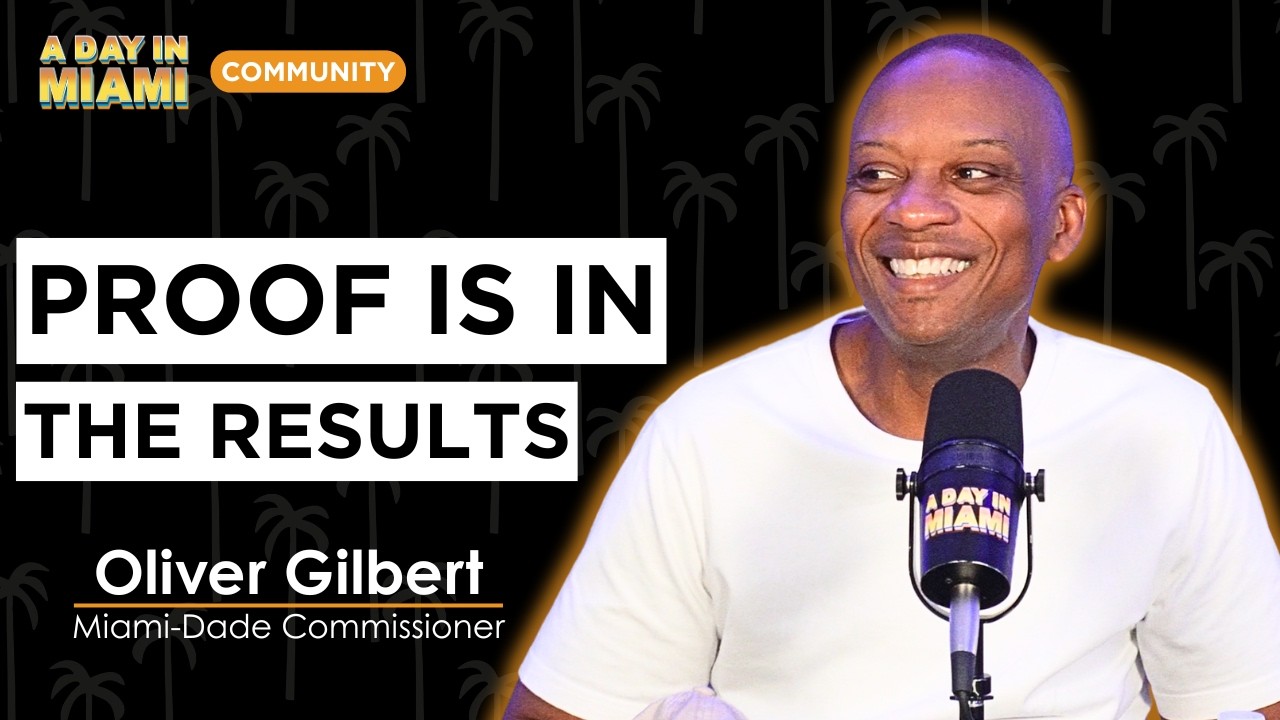
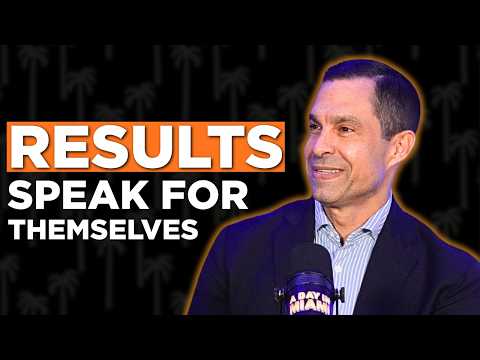
The Man Who Transformed Miami Gardens Is Running for Congress | Oliver Gilbert
Before Oliver Gilbert was a Miami-Dade County Commissioner, he was Mayor of Miami Gardens, where he helped shape the city into what it is today. Now he's runnin...
About This Episode
He covers his endorsement from Congresswoman Frederica Wilson, SBA 2.0, community based organizations, traffic and transit corridor redevelopment, property taxes, and why local governments deserve more autonomy and state funding. Plus his top 3 Miami restaurants.
From Miami Gardens to the County Commission to Congress — this is his case.
A Day in Miami Website:
https://adayinmiami.com/
Manny Alfonso:
Instagram: https://www.instagram.com/mannyalfonso8/
Kiko Suarez:
Instagram: https://www.instagram.com/querikoconkiko/
Eduardo Moya:
Instagram: https://www.instagram.com/mr_moya/
Follow Us! - A Day in Miami:
Instagram: https://www.instagram.com/adayinmiami/
Listen on Spotify:
https://open.spotify.com/show/20WEys6jxiliBCLoo9iSID
________________________
Produced by: Ben Schwede
Instagram: https://www.instagram.com/benthecreatorrr/
0:00 Intro
2:01 Knocking Doors
2:28 His District
3:09 Issues of Miami Gardens
5:55 Speeding Up the Permitting Process
6:36 Opening Topgolf
7:54 County Commission Meetings and Voting Based on His Principles
12:09 Running for Congress
12:59 Why Congresswoman Frederica Wilson Endorsed Him
18:48 Is Miami-Dade County Commission Harder than Congress?
21:25 Why Being Involved is So Important
24:59 SBA 2.0
26:10 Traffic
33:18 Why People Don’t Want to Use Public Transit and How to Fix It
34:40 Redevelopment Along the Transit Corridors
37:17 Why Building Public Transit is Important
41:43 Budget for Transit
45:15 Impact of Reduced Property Taxes
Why We Need to Be Getting More Funds from the State
49:58 Why Local Governments Should Have More Power
55:20 Community-Based Organizations
56:50 Why Being Informed Is Crucial
1:00:20 Top 3 Restaurants
1:02:30 Outro
About Our Guest
Oliver Gilbert
Before Oliver Gilbert was a Miami-Dade County Commissioner, he was Mayor of Miami Gardens, where he helped shape the city into what it is today.
You know, I always start the podcast with saying um I'm I'm the hyper one and then we always have our producer Jay that he's Mr. You ready? Three, two, you know, like so he he brings me a little bit down on top.
Don't be down. [laughter]
No, me can.
No, no, I'm good. Listen. Hey, Dave Miami. So, we're back with our new another podcast and we have our special co-host today. You know what I'm saying? Which is we got Andy with us. Say hello, Andy.
Hello, everyone. Day Miami fans. Thanks Manny for the invite.
No, please thank we you know we love having you here. You know we we we we like to do our switcher roomoo with our co-hosts and at the same time we have a spectacular guest which to tell you the truth you know I haven't really had the pleasure because a lot of the politicians I I know personally from I've never really had the pleasure of of of I may have met him in in social gatherings but I've never had the pleasure of really meeting and getting into depth conversation with our commissioner Oliver Gilbert. So, welcome to the podcast, Commissioner.
Hey, thank y'all for having me. You know what I'm saying? So, how can I become a special co-host? I'm here for it. Let's go. Let's go.
Listen to me. Don't even You want TO SWITCH CHAIRS?
NO. LISTEN, I WOULD LOVE TO INTERVIEW YOU. NO, this is great.
Here's my thing.
Let's go.
I don't know if you're going to have any time to come and do any co-hosting with us.
You're right. I might be a little busy. I might be a little busy
right now. There's a lot going on. Yeah. So, but you know before we get into that, um I for for all those uh day in Miami family, this is commissioner Olive Gilbert from district 1 and and and he can go ahead and and and and talk about his uh where what he represents and everything. But one of the biggest things that we wanted to do, we wanted to bring in the commissioner to talk about his district and apart from that we wanted to talk about his future plans because these are very very very very important future plans that the commissioner is doing. So, welcome to the podcast commissioner.
Hey, listen. Thank you for having me. This is good.
You know, so when Andy says, "Listen, I would love to have I go, we jumped at this. I we would love to have the commissioner on." You know what I'm saying? He's a very important guy. And right now, you know, the guys the guy the guy's shoes are are are worn already because of all the walking
walking. Listen, I've been doing the walk the door to door walking. It's it's a very very very but it's the most refreshing part of actually being out there knocking on doors because not every interaction is like, "Oh, yeah. We love you." Some people actually have questions.
Yes. But but in answering their questions, I mean, talking about your my record and talking about my ideas for America and our district, it it's actually rewarding. So, I actually I my shoes are warm, but I love it.
I believe you. So, for those who don't know, right now you are
I'm a county commissioner in District One. Uh District 1 is the area that is Miami Gardens, Opaaka, Country Club of Miami, uh west all the way almost to 75 down 183rd Street. You know, it it is California. It's it's a district that's interesting because it's very wide.
Okay.
It's very wide. We we are we border Broward County. We really don't go much much further south than 151st Street. It's a wide diverse diverse district. Uh you have people who are very wealthy. You have people who are impoverished. And so, you know, I I'm I am a commissioner for all of those folks. And you know after being mayor of Miami Gardens I was the mayor of
Miami. Right. Right. Prior to that you were mayor of Miami Gardens.
I was mayor of Miami Gardens. And so I was mayor of Miami Gardens for eight years. And so when I become mayor of Miami Gardens Miami Gardens doesn't have a good financial reserve. It's like somewhere I don't know 7 n 11%. And the the crime rate is high. There's no economic development. All this stuff is going on. And I started talking to people about ideas about not build not everybody was saying unless I'm going to move to myar. And I thought that was like crazy. That's crazy. Like why would you move? build the place that you want to be. Just build it. It It's not really that I mean, it it takes time, but it's not complicated. And so, you know, I told him, "Listen, I'm I'm I'm practicing lawyer. I I could move anywhere. I'm I bought this little house from my parents. I lived here until I was 10 years old. I'm going to remodel this house. I'm going to live in this house with my family. I'm going to stay right here. I'm gonna stay right here. I'm not going to move anywhere. I'm going to build in Miami Gardens what I want." And when I became mayor, they gave me, you know, I remember I ran against like six people and everybody was I was not the favorite. Um, and I got like 63 or 64% of the vote with six people on the ballot.
Wow.
And so it it impressive.
It's one of those things. So I just was just talking about what what this is what you like. What do you really want?
And so I talked about things like, you know, you're driving your kid to, you know, ballet lessons in Weston. Why can't you have, you know, partnerships with folks on our parks that actually teach ballet? They give them the facility and they they bring in the service and why can't we do things like that? Why can't we invest in these activities you you say are important and so why can't we have businesses? Everybody was telling me, "Oh, businesses will never develop here." I remember the city manager, Andy, you you'll find this interesting. What he says is he says that um I'm talking to him about business development and he says well the only stores that are business are really going to open in Miami Gardens he said are liquor stores and gas stations.
Who was this?
Yeah. This is the city manager at the time.
City manager. Okay.
And so you know I was like
job.
Yeah. Yeah. That that was that was the most offensive thing ever. It needed to say he found
what is he what does that guy insinuate?
Yeah. Yeah. Yeah.
He found a way to move on. I don't know how that happened right now, but the reality is is that discount retailers like to be every three miles because it's actually the poor communities
that actually are cash customers. They buy stuff. They buy stuff. They spend what they earn in stores like that. He got it wrong.
He got it wrong. And so I I did something. I said, "Well, the reason why folks aren't really opening business is because all the land use is designated residential and main commercial corridors. Why don't we start by just changing that? Let's just try changing that. Let's change that then. Let's let's make this permitting process easier. I remember I remember targeting the uh county and I was like, however long it takes the county to process a permit, I want to be five days faster.
I just want to be five days faster than the county. It did.
It did. I I I faster.
You know, in the development business, that's real money.
That's real money. I said, I want to be five days faster. I want to be five days faster. And then they were like, yeah, it's just let's just be faster. be faster than the county. So whenever they're benchmarking you against what was they're benchmarking you against something that you're better than and so I use them as my benchmark and well I'm a county commissioner now so that's kind of unfortunate but I used them as my benchmark and and we just worked towards that system when I was mayor and it was you know it wasn't it wasn't all good stuff but I knew that if I got one good business and I remember what that one I called it my proof of concept.
What was that business?
It was Topgolf. Nice.
Oh, yeah.
It was the first Top Golf that was going to open in South Florida and they had several sites and one was in Fort Lauderdale in this great location and I went up there with the city manager, a new city manager that I hired and we I pitched them on this location and we had this spot that was supposed to be a truck stop and that's what it was zoned for. It was zoned for like heavy industrial stone for a truck stop. And I remember when I was talking about Topgolf and I I bring it back and and uh the the residents actually came out and were mad at me. We don't want this. What's this golf? This isn't for us. And I was like, "No, you all are going to love this place. You don't you don't really know what it is."
Can I take you guys over and see what
Yeah. Yeah. Yeah. It's It's Yeah. So, you're going to love this place. You're going to love it. I mean, they they complain. You're going to love it. I was like, "Well, even if you don't love it, do you really want another truck stop? I mean, do you need another truck stop right here?
And so it gets built and it's successful. It's like incredibly successful.
So res Oh, yeah. I passed. Yeah. Listen, I people yelling at me. You can yell at me. If you think that, you know, if I think that it's the right thing to do and it'll benefit the community. When you're elected to office, the common misconception is that when people come to the meeting that they should be able to tell you what to do. Listen, you're not elected just to serve the people who show up in a meeting. Primarily, you're elected to show serve the people who don't. Like, so people go in in a representative republic, you go and you vote and you vote for someone because of their vision and their values and you elect someone. Now, you elect them and you can participate. I encourage people to participate, but just because you come and 20 of y'all come and y'all showed up and you're angry, right, there's still 120,000 people in Miami. I'm so glad you just said that because not to interrupt you but you know we talked about this the other day with I don't know who and I forgot because we do the podcast but
it's just not we all would love to go to the day county
commission chambers and but a lot of people have to work and you really so what you're saying is really you know it makes so much sense because a lot of these people go you know to you know do ruckus and and do everything oh well let's everybody which I I encourage it but not everybody can have that time to take off and go and this thing. So to to your point, you're not just representing those 20 people are against it. There's so many hundreds of thousands of people out there that cannot attend the meeting that would like to know what's going on and you're giving an explanation.
And so you'll see that like sometimes at county commission meeting, you'll see folks come in there against a development
and and they were like, "Yeah, we don't we don't want these we don't want these apartments and we don't want these, you know, and sometimes people even say we don't want these people." which I think is interesting that that we've evolved or devolved to a point in our society that we can actually say that sentence and it be okay. We don't want these people or these types of people. And so that that was that was interesting especially when you're talking about workingclass people. And so pe no one wants their their neighborhood to change. But if we really want to accommodate a growing population, we have to build t density and we have to make places. And so it it's I sit up there and I listen and you can I I'll try to I'll try to shape this in a way that is not it's as least disruptive as possible.
Correct.
But ultimately I'm taking a vote that's not based on just the people who showed up. I'm taking a vote that's based on policies that work for everybody who everybody even the ones who didn't show up because the ones who didn't show up they they they they voted too. they they live in this county, too. And they had we had an election that said, you know what, you don't have to show up. I am going to lead based on these principles. So, I talk about what my principles are when I'm running for for office. I'm going to lead based on those principles. And the one thing I've always given folks when I was a city councilman in Miami Gardens, mayor of Miami Gardens, county commissioner, vice chair of the county commission, I will tell you exactly how I voted and why I did it. I I'm I'm not backing away from my votes. I believe what I believe. and and folks, you know, sometimes it works out, sometimes it doesn't. I remember a zoning application in Miami Gardens where a church wanted to do something and I was like, yeah, I can't I can't really I can't really vote to approve that. And it died. And I remember the lady yelling at me telling me I was going to go to hell.
Damn.
And I was like, man.
Yeah.
I was like, well, I don't I might go saying, do I want to go against that church?
Yeah. [laughter]
I was like, man, I might I might go to hell, but it's probably not going to be for this. Like that's not going [laughter] to be this.
Like there's some stuff I did in my 20s. [laughter]
WE'RE NOT GOING TO ask about that. Like there's some 20-y old Oliver stuff that you know if God was just taking notes.
He might be like, "Hey,
we hope he wasn't going to bring us that."
Exactly. St. Peter might be like, "Hey, Oliver. Hey, what's up?"
So, I mean, remember this if So, but it's not it's not for this because I get that the entire church is here in front of us. I get that it's important to you. I also get that that's not that's not the highest and best use. It's not something that we need on this corridor right now. Let's let's try again. And and so they ended up coming back years later and there's a project now. The church was happy there's a project building got to use their land. We we got we got workforce housing there. It it it all worked out. It worked out. Had a master plan. She just had to be a little patient and let it develop. She had to be a little Yeah. She didn't get the memo.
It worked out. So she didn't get the memo. She didn't get the memo was a little late. get them.
Yeah.
So, so, so you you're the the mayor, the county commission, those are nonpartisan.
Yeah.
You're now running in a partisan election.
Yes.
Little different,
but but that's it. We're going to jump into this one already.
Yeah. We're going to jump into it. Right. You know, it was easy. It was easy pick right there. You got to jump into this one.
He was talking about, you know, for everybody, right? So, in the primary, which this is the primary, August 18th,
Yes.
get out and vote.
Yeah.
No matter what district you're in. Yeah.
Get out and vote.
Um, so it's a primary, so you're running in a Democratic primary.
Yes.
That's a little bit different [laughter] than than nonpartisan.
It is a lot different. Yes.
Well, welcome to the game, right? Okay. But but but apart from that, I I I would love the commissioner to, you know, elaborate a little bit of this, but you're running in in a in a district that's been held for a long time by, you know, a lot of people in the Democratic party. You know, say an icon, a person that she's a legend, she's,
you know, I mean, again, I always tell people, you know, we we try and make this really nonpartisan either. I mean, you could be Democrat, you could be Republican, independent, but you got to respect the fact that a person like Federica has been there for so, you know, so many years in the sense that she's always been voted by her voters. You know, it's not like, you know, people want her back in Washington. You know what I'm saying? So, it's a lot of people would say, "Wow, big shoes to fill." In that case, big hat.
Big hat to fill. Big [laughter] hat to fill.
Big hat. Big hat. Big hat to fill. Yeah. You know, whoever doesn't know Ferica knows her. She has her hat.
She has her hat. She has great taste for horror hats. So again, you know,
Federica, talk to us about a little like so I can't really overstate what she's been to the community.
Yes.
And so sometimes like my my dad and my my parents, they're both deceased. They all they were Frederria like not to say fans it was is an understatement. My mom had the opportunity to meet meet two presidents. Um Bill Clinton and Barack Obama. She met both of them. uh the person who she valued the picture with most was Frederica Wilson. It it was it was it was a very interesting that's how beloved she is in the community. Starts off as a principal. um leads becomes a community leader by by you know forcing a a ironically like a waste site that was across from a school out you know gets active before she's an elective before she's even elected with with Haitians and at Chrome and how they're detaining women there you know becomes a school board member goes to the state house runs for state senate and there becomes a congressperson she has been a constant voice and source of leadership in this community for almost I guess 30 years she's been Congress for 15 years and so her leadership is amazing. I was very proud to receive her endorsement.
Yeah, I was going to tell you that's
there was Yeah, there was a lot of people in the race. Everybody
That's my better much better than the church lady.
Listen, much better. But [laughter] but listen, everybody wanted her endorsement and then she endorses me and they all everybody wanted her endorsement. Everybody called and then she endorsed me. As soon as she endorsed me, they said, "Oh, endorsements don't matter." As soon as I was I was like, "What? What do you mean? It would have mattered if you got it." And and my my point to everybody was like it's it's not that she picked me as a person, it's why she picked me as a person. She talked about my work, the work I done in Miami Gardens as mayor, the work I had done as county commissioner. She talked about the fact that Miami Gardens wasn't in good shape when I became mayor. When I left mayor as mayor, they were an all-American city. You know, Miami Gardens becomes a city in 2003. By 2020, they're an all-American city at what I said would happen. and I become mayor in 20 in in 2012. I said, "In 8 years, we will be an all-American city." And people laughed out loud. And then I went out and earned the designation. Objective people coming through, evaluating us, um, looking at our finances, looking at our progress, looking at our community initiatives. They made that determination. And so she she looked at stuff like that. She looked at the work I done as a county commissioner. I get elected to be the vice chairman of the county commission in my first meeting and in my first term I become chair.
Yeah.
You know and I got I got the county through through tough times and we we came through good because I found ways to actually work with people. You know when people talk about like Congress and and how partisan it is and it's not it's not the same as day county. It's not but it's it's there's some interesting similarities. I I I I think so.
It's some interesting similarities because you know, Congress is closely split just like Date County Commission is closely split. So, we're not there's not these big riffs. So, you don't have the luxury like in the and if you're a Democrat in the Florida House and you're in a super minority, you can throw as many bombs as you want to. You can insult as many people as you want to. You can demonize the other side as you want to because you're never going to pass your item anyway. Your important stuff's never going to be a part of legislation. But when you're a you're a part of a body that's closely tied, you have to find a way to actually work with people to solve problems with the understanding that it's not going to be perfect. It's not going to be perfect. You have to find a way to get the work done because whether it's the county commission or when I was in mayor of Miami Gardens, I didn't have anybody to blame if I wasn't successful. When I said we were going to turn this city around, if I didn't turn it around, I can't blame the Republicans. I I have to actually get it done. So, I have to get it done. And so, she talks about the work, how the parks were closed. I opened them. We didn't have good finances. When I left, we had a 47% reserve in our general fund.
That's That's impressive. A lot of money.
Yeah. Yeah. So, I've said I've said
the things I said we would do,
we did. And so, she she wanted that type of leadership to succeed her, that type of work ethic to succeed her. And so, I I'm very honored to have her endorsement and and partisan politics to your point. It's it's it's interesting and tough.
It seems like a combat sport these days.
It is.
But that but okay. So let's elaborate a little bit on that because you know I I really love what he's saying. I mean again if if it's nonpartisan it's nonpartisan. Sometimes you got to vote you know your conscience. Are you voting correctly or are you just voting party lines? You know what I'm saying? Which I think that we've you know it this is just out of hand where we are nowadays. And before we got on camera, commissioner was talking about the fact of like, you know, all the voting you did in the Day County Commission. Yeah.
As as you stated, you know, you were things that what you did in in Miami Gardens with the church and you know, you have everybody from the church, you're going to go to hell. I'm sorry, but I can't vote for that. So,
you know, is is is it do you feel it's going to be a huge challenge for you or you going to try? Because I said beginning if you pass the test of Miami date, I think Congress I think Congress is going to be a walk in the park for you. Listen, a a good example
because day county commission can be a little tough.
A good example is the RTZ, rapid transit zone.
Yeah.
I did the rapid transit zone ordinance and when everybody said it couldn't be done, it took me 18 months, but I went I traveled the entire county.
I traveled the entire county, listened to all all the cities, got all their comments, compromised where I could, rewrote the language, brought it back, and it wasn't unanimous, but it passed. Look, it it it can it can be done. Day County is a difficult place to govern, but it can be done if you're willing to put in the work. Um, in in Washington, look, I was in a screening for a union and uh they asked me, they said, "How are you going to deal with the pressure?" And I I told them when I I went to FAMU for undergrad and there was a time when my my dad had been laid off. My parents didn't have much money at that time and so they couldn't help me my rent. I ended up being homeless, living in a car. I was living in a car, um, showering in a bathroom, public bathroom, working at night, and going to class during the day full-time. Congress isn't pressure. Yeah. Congress isn't pressure. I lived in a car in Tallahassee in the winter. Congress is not pressure. Like, I I don't I don't I'm I'm a I'm a lawyer from M. I I I have a wonderful wife, wonderful family. You know, I live in a wonderful community. Congress didn't pressure. You go up there and you do what you think is right. You put in the work. And so to the extent that anyone thinks they can pressure me into doing something, that's not going to like that's not like that happen. But you can convince me.
I I I love I love information like let's challenge it. Let's go through this. Let's go through the information. Let's figure it out.
Let's figure it out. I I'll go back and forth and and I think that that that type of leadership style has served me well on the local level. I think it'll serve me well in in DC also. And you know in it's it's an it's an interesting place, but I think it's time we bring some common sense back there.
I like that. I like that.
We we we're definitely missing some common sense.
Yes.
Yes. And and youth. We're missing youth in Congress. Well, I mean, listen, again, I I I I praise the fact of of what he's saying because the most important situation that everybody right now when you talk to like, you know, younger people, everybody's a lot a lot of people are getting discouraged and not wanting to run for public office.
Yeah.
You know, um and we here at the show, we try and, you know, we talk about entrepreneurship, we talk about people saying, well, can I do that? Can I do this or do do I have to be a a wealthy person to do this? No. And and I love the story, you know, and and and for you to talk to all those, you know, people watch the day in Miami. It's important to keep on getting involved because a lot of people are getting discouraged and a lot of people saying, "Oh, because of all, you know, you see the news and the news, you know, the news itself tries to discourage you with everything that's going on." And, you know, is it still important for all these young people to get involved in their community?
No, it it is. And it's not just an elected office. We're seeing people, you know, not apply to be police officers, not wanting to join the military, not, you know, it's it's in public service. I I think it's something worth noting that we should pay attention to the lack of confidence in our institutions because we're only as strong collectively as our aggregate aggregate strength of our institutions. So people don't think about it. And it's one of those high level thoughts that you, you know, you you have when you're in a philosophy class or something. But most of the stuff we think of is certain really social constructs, things that our collective belief give power to. So our collective belief gives power to democracy. We we all believe in it. What happens if that starts to fracture is the question. And so the the American dream is an interesting thing. The American dream is interesting because um it requires us to be hopeful, to be optimistic. It requires people to believe that that they can actually change their station in life.
We had a bit of this conversation. I was hoping you you'd
Yeah. We And so I I'm I'm very very very like I'm I'm very protective of the American dream. And people tell me I was idealistic. Listen, history is littered with places where where the masses lost hope and almost to a point there was always an overturning or downfall of the government. Always. You cannot do that. The the first major thing and I, you know, we were talking about this before we came on camera, but I I have policy positions on my website and and the first one I put up really was about I called it SBA 2.0, the small business like administration. So, I want to find ways to actually get capital into areas into small businesses. Small businesses create like two out of every three jobs in this country, but our tax policy isn't necessarily written for them. Um, the investment tools that we have to support them are are are struggling sometimes. Their programs, the 504 program, 78 program, those they're programs that work. They need to be enhanced. We can do things like in in specified areas. We can we can help talented people become entrepreneurs that helps build opportunity in communities. It circulates dollars in communities and it it underscores hope like you you have to you have to have people believe. If people stop believing that they can change their life then they start living for just today. If people enough people start living just for today, we need a lot more police officers.
Yes,
we need a lot more police officers. We can't afford it. So
the uh that SBA 2.0 I know sounds much like uh it could ride on the coattails of say the opportunity zone legislation that g gave developers the ability to buy land in areas that were being ignored or blighted and give them the tax breaks or the development incentives to give rebirth to a neighborhood. Sounds like
and so it's funny you bring up some it sounds like opportunity zones except for this is the difference. The difference is it's not linked to land. is actually linked to business and job creation. So now if you're in this geographical area that's been, you know, impoverished, disassociated for a long time and you're starting a business there, these are the breaks you get. These are the access to loans you get. This is the this is the technical support you get.
It's almost like it could be a companion because you still need someone to build the brick and mortar that that business can go in. Absolutely. But absolutely could.
But then we have we turn to this and then of course we we could be here for four hours on this. could.
But at the end of the day then when I've had other developers, okay, looking at issues of how to try and resolve some of this stuff and you have a whole bunch of DM in Miami, you know, uh, people are looking at the podcast that have valid points. Traffic then, you know, the magic word here.
You want to talk about traffic?
Yeah. No, no, but that's what I'm going at BECAUSE I I YOU HOW EXCITED IT IS. TRAFFIC, but I want I traffic's usually the ugly Miami date county word cuz it's the one thing that when businesses move here, that's what they
I would love to talk about traffic,
but but you are because here's here's here's my take on this.
First, we're going to argue about every time every time we have a podcast with anybody talking about even they're doing apartments uh to your point, you know, you have people everybody's American dream. I want a home. I want my little backyard. I want to do my barbecue. I want to do it. Some people can't afford that. Some people can say, "Okay, we're we're going vertical. We're going to do more apartments." But then people say, "Oh, you're gonna bring more." That means traffic. Everybody just puts on everybody's comment traffic. And then I say, "So what what is it that we're supposed to do? Close Miami? We we're supposed to close. We're done for business." When you still have so many people from other states or wherever wanting to move here, you like I call this I call Miami, USA. I I don't call Miami Florida. I I feel like we're own our own little country. Everybody just wants to be here.
There's like a a Instagram Instagram buzz post that says this guy says, "Uh, you from Florida?" He says, "No, I'm from Miami."
There you go. [laughter]
BUT FLORIDA MIAMI. Where's in Florida? Well, Miami's is Miami's Day County.
You need to show me that. I want to know where that guy is. Miami.
I'm from Miami. So, yeah. It's It's hilarious. It's like I'm from Miami. No, no, no. Miami is we're different and we are look 53% of the people in this county were born in a different country. That's an amazing statistic. So when I talk about us being the capital of the hemisphere um in the coming years, I'm I'm serious. Uh traffic is something we have to deal with. I actually I built out an app called the congestion app. It's a congestion calculator. It actually tells you how much money you're wasting because of traffic. You put in your your you know your car type, the miles you drive, your average commute, and it'll tell you how much money you you're you're actually spending because what's happened is we we become irritated in traffic, but we become desensitized to the cost. And so whenever we talk about rapid mass transit, which we know we have to invest in, people say it costs too much. You're spending $12 billion a year anyway in congestion costs,
but it's just become silent. It's wear and tear on your car. It's the the increased maintenance on roads. It's the price of gas. It's the price of your time. And so it it's happening anyway, but we become so desensitized to it that we can't we can't actively decide we're going to pay for something that costs a lot because this other cost is an invisible cost. And and on the the the topic of homes, it's interesting because the single family home with a corner lot and a white picket fence with your, you know, 2.4 four kids or that that is the American dream that was that was sold to us. We have to redefine that. You can make place you can make a place. You can make some place feel like you're and we're going to see more of that stuff. You're going to see more density, but inside that density, you'll have recreation areas. You'll have shopping areas. You'll have those things that actually still allow people to feel like home. And that's not saying I want I want to get rid of single family homes. I don't want to do that. But I understand that unless we're going to do something with with regard to popular the population that's moving here, we our neighbors are the Atlantic and the Everglades.
We're not going wider. We're going to go vertical. And that's the real way we actually bring down cost over time. We it it's it's it's supply and demand. It is you have to raise the amount of supply such that it's greater than demand. So you can overtime bring down bring bring down cost of housing. And when you do that, when you're when you're building that density, you have to have rapid mass transit in place because we can never afford to add cars at the same pace that we add housing units. So So these are things that, you know, I I incorporated this thing called 30 for 30 people who were gathered to talk about how Miami Day County would look in 30 years. It's academics and housing experts and it's it's still working. We just started. It's it's it's it's it's a very interesting project because we're going to come out, we're talking about higher ed, job training, housing, transit, uh our medical facilities. There are things we know that we have to concentrate on to make Miami Day County really a prosperous and successful place to live in 30 years. So, why don't we just start doing it now? And and I look at like I look at the the rapid mass transit in the north corridor, the corridor that was planned for my area. If they had done it 30 years ago, it was like $200, $300 million. Now it's approaching a billion dollars a mile. It could be as much as $3 billion. So now we're looking at different modes because you can't put he can't spend that much money on heavy rail, but we might not have to spend that much money on heavy rail. There are other technologies now, but we have to be aggressive and active and intentional and and we have to actually look, we need to ask better questions during election times. So, I I'm tired of electing state legislators and governors who won't invest in transit in Miami Day County. More people take our bus and our metro rail every day than than the population of 17 counties in Florida. Don't tell me we're the same. We're not. We're something different. We're an economy that supports this state. Our transit system supports this economy. If that transit system stops, this economy breaks down. And it doesn't happen very very, you know, slowly. It hap it is
it breaks down like that.
So they don't we need partners in Tallahassee and we need partners in DC
who are willing to actually invest their portion in making sure we can actually build out this system. And that's one of my that's one of my priorities when I go there. Rapid mass transit in Miami date county. And and that's one of the things that Congress people are supposed to do, right? Bring back Congress is supposed to set the budget and control the purse and bring that money back to that. That's only what the Constitution says. It's only what the Constitution says. That funding, the funding, the funding starts in the House of Representatives. Only the Constitution says I know I remember. I remember that thing that used to happen. We used to have a constitution. You remember that? the checks and balances, spending starts in the house, the president can't just go to war by himself. Like there's some things in the constitution that I think
we haven't done uh for the country, Congress hasn't done for years,
the proper budget process. It's all by this continuing resolution. You name the president or the party, it's all let's hunt it down the road. Correct. It's uh it's not the way that I guess we learned it in government.
But you know, in one sense, you know, the commissioner is talking about um with the with the transit. Sometimes I see like is it people just in Miami that just don't want to get the transit and they just prefer, you know, driving their car to the place or is it because they say does it make sense or you know the stops? I mean some people
it's it's the culture. Um it's the culture mentality of how
it's the mentality and and so you have to change it. There are things that can be done in in government to actually shape, you know, how people behave. Um, allowing people to build density without parking requirements will force people to use transit.
It will force people to use transit.
Yeah,
you can. I mean, and so that's one of the things that you see in zoning now, like progressive zoning around the country is allowing people to build um with fewer parking spaces allocated to those spots with the understanding that we're you're building on transit corridors. And so, we're not making provisions for your vehicle. This is for people this this housing is for people who essentially want to invest in transit. If you want to find someplace else to park a car, you can do that. Or you can get on uh metro rails, you can get on trains and trolleys, you can do those things. And so you see that in other communities around the country. What we know that eventually we go that route because it it's look, it's not whether we will do it. It is when we will do it and how much it will cost. It we don't have other options. You just said it. We're not going to stop. We can't stop people from moving here.
But with the pace of development, the corridors to to build that mass transit are being taken up with development. Look at look at US one. All the big buildings that just went up that that uh
US useless one. Which one? Some people call useless one.
They do call useless one. But I was being kind.
I know. But I still take US
church lady's coming to find you.
Yeah. [laughter]
It might be true for you too. Yeah. Okay. So yeah, but but US1 has the metro rail.
Yes.
It's elevated. It's elevated now.
It does. But there's still a lot uh there's developers built along it. And other than a few stops, it it there's nothing to do along those stops, right? You have you have uh Douglas Road, you have 27th, you have Dadeland,
Dadland Station and Dadeland. So there's some shopping associated with those and a destination to be productive with, but a lot of the miles of it
are warehouses built against
and I think I think the redevelopment along those areas will will happen as we allow for the RTC to take effect in some areas and I say it like this. So real estate like you're you're a very successful developer and you're a very good lawyer. So,
well, some may say that
the h highest the highest and best use the highest and like we learned in in in land use the first day the highest and best use of property.
So, that like there's a warehouse I can think of is like right like off of like 27th and US1 that area. Well, at some point that person is going to look they're going to see that warehouse and they be like, well, you know, this warehouse is is is it's good. It's a good spot, but if I could move this warehouse someplace else and I could sell this property for like so much more money, they they will I mean that the free market I still believe in the free market. The free market and I don't believe that things will happen o overnight, but the free market will handle these things if we put the land use in place and we allow the vehicles and we build out the transit. The the the problem is having an actual system. So right now we know that we can't have heavy rail all over this county. I wouldn't propose that there technologies like glideways technology which is still an elevated fixed guideway which is what we changed the locally preferred alternative to in um in in TPO so that we could it's it's much cheaper but it gets you the same speed and in some respects it gets you direct trips and not not with stops. And so it's it's a more it there are things that we can do if we actually are intentional and aggressive. And look, I as a as a young man, I got on the 27 bus. I had to wake up at five o'clock in the morning in Miami Guards. I got on the 27 bus. I came all around 20 all the way down 27th Avenue up to the Martin Luther King station. I got on the Martin Luther King station and I took the metro rail all around the way around the University of Miami for law school. I had to do the same thing, same trip back every night. And so sometimes my dad would meet me at the station and he'd ask me what what did I learn today? And so that would be our talk home, what I learned today. What what what what I know is that we can change this. What I know is that that transit took me to my education. It literally took me to my education. It literally took me to my future. And and so I I'm bringing that that experience, that lived experience back to Miami Gardens. So what I'm saying is we have to address it. And I know it's not going to be easy. I know that we've had the half penny here and that people have a history of but but I I'm going to say something that most most contemporaneous elected officials won't say about past elected officials. I don't agree with their decisions, but I understand it and I won't vilify them for it. They were facing a system that was going to collapse in in the housing. They had to make a decision. They had to make a decision. It was the money that was available to keep buses moving. So they used the half penny to sustain the system. They they didn't feel like they could raise they they didn't feel like they could raise the the bus fairs that they needed the money to keep people moving at the time. It was a difficult decision to make. I get it. I get it was and so and then once you do it, it it's hard to it's hard to peel back from it. It just becomes very difficult. I get that also. And and so we as a community now with with that as a collective lived experience, we have to figure out ways to get through that trauma to still build something that collectively we know has to exist. So I I can't change what happened with the half penny. But I can tell you that if we don't fix this, all of these ideas that I want to live in the Miami that that I grew up in, that that's not going to happen anyway. The city's going to change. the countyy's going to change, but but but whether it's actually livable, whether congestion becomes unbearable, whether we we cross that that tipping point where congestion is so bad that businesses start to relocate because that is what happens because housing is so so expensive because we don't have rapid mass transit and we don't have density that people can't afford to live here in this place that's still primarily fueled by tourism. Like, so we we have to be we have to be we have to be thoughtful and we have to be brave.
Well, listen, I I I I I respect 100% what you're saying because at the end of the day, you said something that's so true. You know, you can't, you know, tell the people that were there before you, they had the problem. And people when you leave come behind you are probably gonna say what you know should have could have would have you know they're probably gonna go justify maybe saying that you did something wrong or or or you you should have done this.
I just I just feel that traffic is always going to be an issue. I mean we could we could sit here again for you know and start drinking tequila or something later on in the afternoon. But the commission is talking about changing minds in the future. Right. Find the location plan for future transportation. Yes. Because our generation, we're wed to our cars, right? We want to be in our car. My car is my office.
Correct. As as mine. Yes.
But
I I have uh tenants at Riverlanding. They don't have come with cars.
Millennials. Yeah.
They It's It's public transportation
or it's an Uber.
Yeah. But and and the Uber situation. But I'll tell you, when I was younger, I used to take the I used to take the metro to the government center because I, you know, it would be horrible to try and find parking government center. So, I would park down here near my my home and just leave my car there and I would I would take the the the metro, which I I loved it. It was great. But at the end of the day, traffic is going to always be an issue. So to his point, we we got I think we have to invest in a lot of psychologists
to try and help and change people's minds, you know, and part of that because let's jump really into that
is transit, you know, where where budget-wise budget wise in in the commission, you know what I'm saying? A lot of people talking about the budget and and budget and budget. How much how much more can we pour into the in into the trans situation
and and we talked about this yesterday in transportation committee because um and and the administration I think is doing the best job they can but they want to raid the TID which is the the money that when I created the RTZ the RTZ created development along the corridor. speak to the people of the RTZ.
The the RTZ is a rapid transit zone and what it says is you can have higher density and higher F floor area ratio along maj major transit corridors and so you can do more that means that it actually increases the value of the property. So when people did more along the corridor um the the TID is the the increase in value over a base year. So if a piece of property this year is valued at a million dollars, you take that million and you put that million in the general fund, but the increase in the value you put into a special fund just for transportation, just to fund transportation, rapid mass transit. So that was the plan. Well, the the administration is proposing to take money out of that fund again for the second year in a row. And they they did it last year and I I said, "Well, I disagree, but you know, it was a tough time. They said they wouldn't do it this year." And now they're proposing it again. And what I said was I don't know that I can go along with that this year. And I understand that it is it's a very challenging year. This a very because we we get less and less money from the state every year and the state not only we get do we get less and less money they restrict the way we can actually generate money every year. So but we're expected to provide the same services. So that's challenging. Um, but if we don't have real conversations about the money that's in that account, the TID, and what it's supposed to be used for, we become the same people who use the half penny to plug a hole and and never actually fix transit. Yeah.
So, we have to do something a different conversation. And so what I proposed yesterday is um instead of you giving us you rating the TID, why don't you borrow it from the TID? Borrow it from the TID. You can borrow it and with the expectation is to pay it back
with interest.
Yeah. So you can borrow it, but I I'm I'm generally I or or in the alternative give me a plan. Give me a plan of what it's going to be. What's our plan for transit? Because right now every bus ride that everyone takes, every metro rail, metro rail uh ride that everyone takes is subsidized. You pay approximately 11 to 12 cents of every dollar it takes to provide transit as a user. So it it doesn't pay for itself at all, but I'm not saying it needs to. No one wants to raise the free the fee. And we have almost 40% of our people either ride free if you're a senior or with a discounted rate. That's how the system is designed. The system is not designed to make money, but because it keeps our economy going, it's still a net positive for us. We we need it to work. We need to have a conversation about what that number looks like in perpetuity and how we're going to actually fund the system. And and I say that because if this property tax um referendum passes in November, in a year,
we talked about
the money that you are funding this system with this the money is going to go away. So one of the the the unintended consequences of passing property tax saying you don't want to pay homeowners home owners property insurance over over a certain amount. it is going to be that we're either going to reduce, you know, transit routes significantly or we're going to raise rates significantly.
One of one of the two is going to happen.
That is what has to happen.
It's the same tax, right? That's what's going to happen.
So, it's just a different pocket.
It's going to be a property tax or it's going to be a user fee. It's going to be a tax or user fee. If you take away to the ability to use taxes, the general fund to support the transportation system, then you'll have to increase the user fee or in the alternative, you'll have to reduce the service. And and so when people talk about like when they talk about Miami Day can, I think it's so interesting because I listen to them and some of my colleagues will do it also. When they're pontificating, they're talking about the multi-billion dollar budget. They're being a little disingenuous because the seapport is one thing. I can't lose se use seapport money for anything but the seapport. The airport is one thing. I can't use airport money for anything but the airport. Water and sewer one thing. Solid waste one thing. Those are all proprietary funds. When you talk about cutting what you're going to do in Miami Day County, you got to cut police, fire, parks, human services. So the the programs that your kid goes to that subsidize after school that keeps them out of trouble. No. The meals that we we provide to the seniors, the ones that's not funded through the federal system. No. Increasing police officers. No. Response times up. Those are real conversations. That's the real outcome to us taking in less money. So, in some counties, like I get it. I get what the legislature and the governor are saying. Like, I I have to pay taxes, too. It's it's a lot. I I get it.
I get it. I get the pain. But in in Miami Day County, this is a sophisticated urbanized area.
It's a problem
without those things.
And we send a lot of money to Tallahassee and they don't let us
they don't they don't let us get it back. So we we have
and until we elect people that can go to Tallahassee and get this community funded where it's a it's a big problem. Maybe you all should do a day in Miami with all the Republican legislators who go up legislators who go to Tallahassee and they get caught up in the ideologue of Tallahassee and forget that ultimately we we just want you to bring us back money. Like we we we don't we don't really care about we we really want you party matter go get money.
Go get money. Go get money. And so one of the things listen when I go to Congress one of the things Yeah. I I I believe in things, but but I understand that in the people's house, I'm going there speaking for a district that's southern Broward, Northern Day County. I I need to bring back money. I need to work on ways to get rapid mass transit partially funded through the federal government. I need to bring back money. I need to work on ways to harden our infrastructure along the coast because sea level rise is real. I need to bring back money because yes, septa tanks need to be removed, but some of them are in the poorest of areas and they can't. The residents will never be able to afford it. And so, as a commissioner, I had a project where I use a lot of my infrastructure a lotment just to go into people's homes and if you sign a waiver, we'll replace your sept and get you on the sewer line. You ain't got to pay nothing. Because I realized that they were old septic tanks that were leaking and contaminating Biscane Bay. Th those folks will never be able to fix it. Like those we have real problems that we need real resources. I love when people say, "Well, throwing money at the problem won't solve anything." Let's try it. Let's just try it. [laughter] I I I never had anybody throw money at my problem and it didn't solve it. If I couldn't pay my rent, you threw money at the problem, it solved it.
If If it didn't solve it, it helped it very much.
Yeah.
It helped it very much.
So, we need transit. Just try it. Yeah.
We need We need to harden this infrastructure. Let's just try Let's have the federal government in Tallahassee actually give us back a little bit more of the money that we give to them. That's all I'm asking for. And and I'm not I'm not I don't need to vilify anybody. I ain't trying to berate nobody, but I think we need to focus on that type of resource recovery.
Well, I mean, I thought the policy was everything should be localized. The federal government's going to let the state do it. The state's going to let the local government do it. But it seems like
No, they're definitely going to tell us what to do.
They're definitely telling us what
they're definitely going to tell us what to do. Yeah.
I like that policy. Decide things locally.
Yeah. It it Well, it used to be a Republican idea that it used to be that they did they were against big government and and then they became president and governor and they decided that they want to be everybody's parent. They want to tell everybody exactly how to live. You know, it's interesting that on taxes, we do actually have a way to lower property taxes in Miami date county that's not in this referendum. It's on the ballot every two years. You get to you get to vote for people who say what services they will provide and whether they'll if you really want to if you really want to reduce property taxes. You you can reduce the millage just by having an election. What what they're doing right now is trying to change the constitution to take away people's rights to vote for people based on their ideas because you you would never be able to propose anything. That was outside of that norm. Now they're literally deciding what local government can do. That means you're right as a voter. If I said, you know what, I want to bring AI clinics and have them available and quantum quantum physics clinics and have them available for every student. Yeah,
I I I could They're limiting that. That That's not That's not just li them limiting government. That's them limiting people. They're saying they don't trust you. The same They don't trust the voters to vote elect people on the local level that actually reflect their values. Even though they're the same voters that elected them, the same voters that elected Ronda Santis and the state legislature elected Daniela Lavine Cava and Oliver Gilbert and Anthony Roberts. the same voters. Trust them. It so I I think tax is too high. Okay, vote for someone who wants to lower taxes. They can vote. They can vote. You don't trust the voters. You couldn't possibly trust the voters because you continuously try to take away their choices. [snorts] No, I I I I do not think it's in good keeping with democratic principles because you're adding guard rails and frameworks that take away discretion, the discretion of people to actually choose the government they want. And they're afraid because if you give people just a choice and you say, "Hey, listen. This is what I want for my kids." When I was at Miami Gardens, I proposed a $60 million general obligation bond and no one no one's in favor of it. It was just me, me, the city manager and assistant parks director, StarX Smith. We were people on the stage. It was hundreds and hundreds of people and I stood up there forever and I just took questions. I took questions and I talked to them about science, technology, engineering, mathematics, recording studios, television, production areas, all these things that you know you want for your your kids. you know what you want in your pock,
right? You you know what's coming. You know what's coming. You know what's coming.
I And I said, "What do you want? If you want this, we can have it, but we have to pay for it."
And and I remember that there were two people who supported the bond initiative financially. It was the Miami Dolphins, which I always thought was interesting because they were essentially supporting an initiative that was going to raise their property taxes and they didn't have kids. It primarily went to parks. They supported. They said it was good for the community. and flow rider. Flow rider was born and raised in Miami Gardens. [laughter]
Florida rider born and raised in Miami Gardens. He he he volunteers on our parts
to the
Yeah. Welcome to my house. Yeah. No, it's in Florida. So, he he he supports it. We passed the bond initiative overwhelmingly and we we we start to reopen and redevelop the parks because people we ask them we asked the people and that's important. I didn't do it myself. I asked them. I told them what we would do and then I kept my word. I started doing it. And so what what they're doing right now and I'm I'm involved in the congressional race. I haven't focused on the ballot initiative, but after August 18th, I'm going to be doing a lot of talking about this because I just want everybody to know however you vote is fine. Your vote is your vote.
But you want people to be
informed informed informed. I want I don't want
whatever thing it is, but you just want and and and you know, you have a point. I mean, just you give your perspective to it.
Yeah. It's like every uh every budget season, people come to the county commission and they're like the cultural folks from cultural organizations, we don't we don't want you to cut our funding. And the community based organizations which provide value services, we don't want you to cut our funding. All of those things are valuable. They come but but but they don't come when it's time to set the millillage. The millillage is what determines whether we can actually provide the funding. So you you if you're going to be against if you're going to be in favor of the activity, you need to be in favor of the money that funds the activity. That that is what needs to happen.
Most people don't know that.
We we need to align
where they're going to take it out of or where they're going to put it in. You know, we need to align.
You got to follow the money.
Very few people are talking about
those things have to align
the next six or 12 months with the tough budget decision coming.
It's everywhere. I mean, yeah. the a lot of the especially in the county
a lot of the community organizations know it's coming.
Oh yes,
but
they they just don't know how to plan for it. Right.
Well, they can't because our support because we don't do like as a county and and even our municipalities in Miami date county, we don't do pure social services um in a way that some other major metropolitan areas do. We actually threw it through CBOS. And so when you're talking about the social service under underet in in in Miami date county, it's primarily provided by community based organizations who we help fund. There is no real plan. If property taxes go, homestead is eliminated, those property tax go away um and we have to cut, they will likely be cut uh and not this budget, but the following. It's very difficult to see a way past that right now because we know we can't really take away police and fire. I mean, there are things we can't
the essentials.
Yeah, we can't do that. We can't do that. And and so we don't there's no good plan. There's no good plan for this. And and what's a shame and it really is shameful is that I think the governor and the legislature know there's no good plan. like this might work someplace like Putinham County. It doesn't work here. And so I I think that it would behoove somebody to really really really pay attention because I want I will be telling voters the truth. Vote however you want, but this is what's likely to happen so that you aren't surprised.
Well, and I think that's that's that's the way it should be, right? Everybody should say, "Listen, this is this is what's going to happen. Now, you still want to vote for it. That's up to that's up to you. Well, if you don't want to vote for it, that's fine. But I mean, to your point, everybody should go ahead and explain it, you know, because there's a lot of people that do not explain these things to people. No,
you know, we try and they hear the they hear the the little blurb on Tik Tok, right, or Instagram, hey, I you have an agenda. There's a there's a to get to save you taxes. That's all they hear.
But then at the same time, I tell people, if you really want to know what's going on, you you got to be informed. And again, it for me, it doesn't matter what party you belong to. You got to be informed of what's going on. If you're okay with it and it's, you know, your party, fine. If it's not your party, you vote the way you think it should be because that's how that's, you know, we go back to the fact of the not, you know, nonpartisan situation. You got to people half of the people don't get blinded. Just say, "Oh, what is it? Is it a Democrat issue? Is it a Republican issue?" That's the way I'm voting. People don't don't look into it. I mean, I don't know if it's, you know, I come from that political background, so I really get into the fact of I want to read what's going on. I know what's going on and and and I'll say, you know, I'm voting this way because of what I believe it should be, but I like the fact of how you go ahead and lay it down and and and really explain it to people that our viewers will really appreciate the fact of you explaining that because not nobody no one has really come here really explained that, you know, that how thing with the property tax. A lot of people come here and say we're for it. Some people come and say we're against it. I do have to say we've had local mayors come and say it it okay. Some people are going to be happy with it, but guess what? I I'm going to have to cut your services over here.
Yeah. It's it's not popular, right? Because telling people that they have to pay taxes isn't popular. But when you call 911 because you know your your grandmother is non-responsive, you want you want the fire folks to get there quick. You don't want them to be under staffed. I mean, there's you you want a new fire station down south because some areas are, you know, everyone doesn't get the same service in Miami Day County. You you you want those things. And so it's I get it. It's like what the president likes to say. People want the crops without the rain.
Yeah. They want the crouch without the thunder. Yeah, the rain. I mean, yeah, it ain't happening. It is. It's not going to happen. Yo, you look like Andy Garcia. [laughter]
HERE WE GO. NOW, NOW THAT'S WHERE WE CUT THE PODCAST. Andy Garcia.
Now, now, now we're getting
You look like Larry. What's his name on the show? Yeah. Yeah. Larry.
What is that? OH, LARRY DAVID.
YEAH, HE DOES. I'M JUST IT'S like I I'm here with
I'm going with Larry David. I'm more money.
I'm Oliver Gilbert. I'm here with Andy Garcia and Larry David [laughter] and this is a day in Miami.
Let me tell you, Commissioner, you know, this this has been this has been a you know, we started off and you know, we asked the commissioner anything we you know, you really want to talk about because listen, let's let's just get into let's just get into our flow here. You know what I'm saying? This this is what the podcast is all about. And I always tell people what's some boring to some other people could be very exciting to other people. And I I always tell you the ones that you think people will call you and say, "Wow, I love that podcast. I learned so much that day." But we cannot let you go without the most important question here. Which this is this is going to be this is worse than you voting in Congress, by the way.
Okay. So, I want you to really just take a deep breath and and take a and take a thing. So, we got to do the Eddie effect, which is the three top questions for you will be Commissioner Gilbert, tell our DM Miami folks, what are your top three go-to restaurants that you like to go to,
you know, it doesn't have to be, you know, you know, you, the wife, the family, you know what, we can never say no to this. We can never say no to this. It could be your district, could be out of your district. So, like I'm I'm I I like the licking. The licking because they have these lemon lemon fried uh like turkey wings
and I like
See, that's one I've never heard.
Yeah, I like the lick.
Keo's on his way.
No, no, Kiko's on his way.
Yeah. Yeah, I like the lick.
Okay. Where's the lick? Where? Where's the licking?
They They have several spots. One's on like 7th Avenue, one's on Miami Beach. Okay.
Uh there's one in Miami Gardens that that Lake Ocean is reopening. There's one in Myar also.
Okay. Okay. Um, I like the lick and actually E-Class, former like he's a me record promoter. He's uh he's the owner there.
What about your number three? Let's go with your number two.
Um I my my number two is probably Chef Creole because I like I like a full like he has this full fried snapper. And I know fried food isn't good for me. Wife tells me that all the time.
Oh, but listen.
All the time. I just
tell her Pilates is making up.
Yeah, exactly. Yeah.
Tell that's what you tell So it's but it's this amazing fried.
She can't tell Cubans that by the way.
Yeah, it's [laughter] a so I get it. No, but she's vegan so like Yeah, it's a thing. So yeah. Um yeah, it's a thing. So but I I I love I love that. And and then um
let's go with your number one.
I don't know that I don't think I have them in order number one, two, or three. We'll call it that.
But I I like I like Carbone because I like their what's that? Spicy regaton. That I I I love that and I love the ambiance. So that's those things. All right. That's a good little
That's a That's a shift.
That's a shift, you know. No, but we have three good ones here.
Yeah. No, I I like I like those three.
I I like those. Well, listen, Commissioner, this has been really a a pleasure. You know what I'm saying? And and you're a very articulate person. I love the fact of of of speaking with people that know their stuff, you know, and can really explain it. We wish you all the best in your congressional race, which, by the way, we want to tell people ballots are already out.
Ballots are in the mail. Yeah. People are voting right now. Yeah. And so the election date
is August
August 18th.
August 18th. So as soon as you move to the next one, which I have no doubt you will, you'll be headed in in into November.
I'll be back. I'll back talk to you.
Well, when you become congressman, we want we want Congressman Gilbert in a day in Miami.
I I want to do that. And when I become congressman, we're going to do a special show of A Day in Miami from DC.
I Oh my Listen,
I'm going to hold you to that one.
He's definitely holding
you. I You know, we've done it. We've done We've done embassies. So, you know, I would love to do I would love to do a show with you over there in Washington.
We can do that.
Thank you so much. Thank you much. Appreciate it.
Never miss an episode
Subscribe to our podcast and get the latest episodes straight to your favorite platform.
Subscribe on SpotifyMore Episodes
View all 52:42
How to Actually Get Your Child Accepted Into a Top Miami School
Nov 5, 2026
 1:01:52
The Woman Who Has Dedicated Her Life to a Free Cuba | Ninoska Perez
Nov 2, 2026
 42:08
The Judge Candidate Breaking Down How Our Courts Really Work
Nov 1, 2026
 57:28
Why Coral Gables Is Florida's Best-Run City
Oct 29, 2026