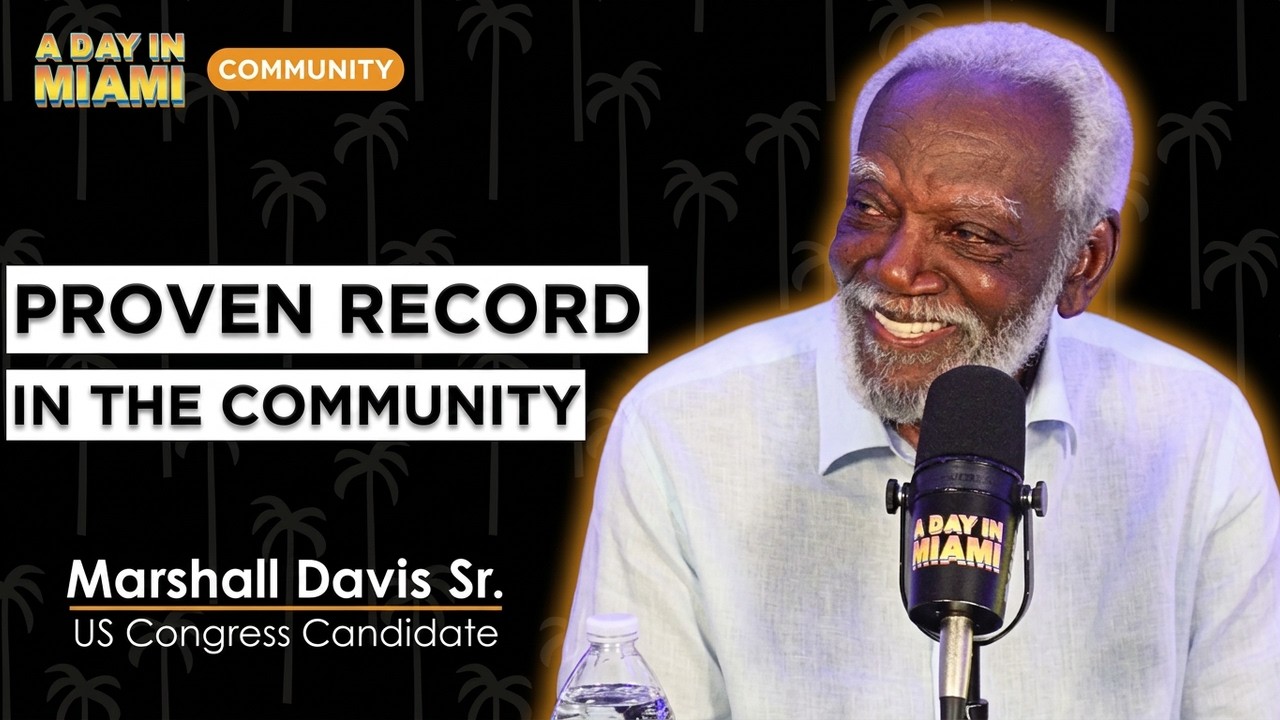
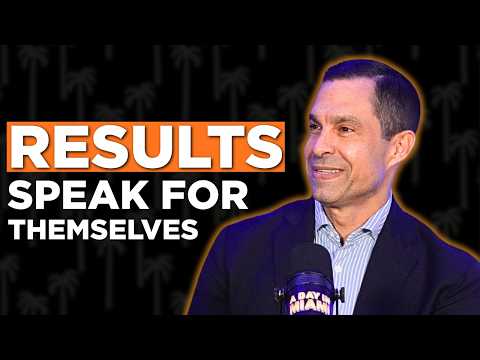
43 Years of Community Work - Now He's Running for Congress | Marshall Davis Sr.
Marshall L. Davis Sr. has spent over 40 years guiding kids and building community programs across Miami — and now he's running for Congress in District 24. In t...
Sobre este episodio
We also get into his 3-3 affordability plan for education and housing, funding cultural centers, attracting business to Liberty City, the difference between politics and "politricks," and what his first day in Congress would look like. Plus a story about a gift from a Ghanaian chief and his top 3 Miami restaurants.
Vote August 18th — Punch #30 for Davis.
A Day in Miami Website:
https://adayinmiami.com/
Manny Alfonso:
Instagram: https://www.instagram.com/mannyalfonso8/
Kiko Suarez:
Instagram: https://www.instagram.com/querikoconkiko/
Eduardo Moya:
Instagram: https://www.instagram.com/mr_moya/
Follow Us! - A Day in Miami:
Instagram: https://www.instagram.com/adayinmiami/
Listen on Spotify:
https://open.spotify.com/show/20WEys6jxiliBCLoo9iSID
________________________
Produced by: Ben Schwede
Instagram: https://www.instagram.com/benthecreatorrr/
0:00 Intro
0:20 Manny Becoming a UM Dad
2:13 Introducing the Guest
3:41 About Marshall
7:23 Success Stories from His Programs
9:47 Why He Decided to Get Into Politics?
11:27 McDuffie Riots
13:41 His Plan for Housing Affordability
15:28 His Focus for the Past 43 years on Helping Kids
17:05 Issue with Cultural Centers
19:30 Getting Funds in Congress for Cultural Centers
20:26 3-3 Affordability Plan for Education
21:21 Attracting More Business to Liberty City
23:35 Politics vs “Politricks”
25:30 First Day in Congress
26:59 Why Vote for Marshall Davis Sr
28:51 What Was Dorsey Island
31:58 Voting
33:00 Gift from Ghanaian Chief
34:50 Marshall’s Plan for the Next 2 Years When Elected
36:42 Recognition by Fellow Candidates
37:29 Top 3 Restaurants
39:49 Go Out and Vote
40:01 Outro
Sobre el invitado
Marshall Davis Sr.
Marshall L.
The the great thing about it is that is is when Jay I always say this when I start the podcast, you know, I'm a little bit, you know, a little bit always a little bit excited. Jay's the one that brings you back down.
He's the calm before the storm.
Sure. You ready?
Three, two, you know, I feel like I'm back in my deep meditation. Listen,
so we have a great guest today.
Yes. Very great guest.
But before we get into it,
I want to ask you cuz I was talking to you yesterday in the afternoon. You're an official M dad now, right?
There you go. How was your first day giving up Milana to the University of Miami?
Number one, let's not use that word giving up. Nobody's giving [laughter] up. What they what I'm giving up is, you know what I'm giving up?
That's what I'm giving up. [laughter]
My wallet.
How was it? How was it? As a father, I know you love your family a lot, you know. How was that?
My wallet has been taken over. Listen, it's it's it's um it's a surreal moment, you know, when you're taking your daughter. The great thing about it is I live six minutes away from you. So, that's a great thing. I just boom, boom, and we're right there. But, you know, I'm saying I have a pain in the neck today because I was putting up little little stuff in her in in her door.
But, listen, the great thing about it is she's excited
and uh she's excited and and when I we'll talk about the person that's here today, but we'll talk she wants to study, you know, political science.
Great.
So, I think that's that's that's great. I mean, I I people say, "Oh, you're putting her into No, no, no. I didn't put any She loved what I did. She loves what I do
and she that's the that's the and I think there's no better compliment than a child of yours and and you know one one of yours is behind the scenes over here which you know we should just do a podcast with her
um of what a wonderful person but we'll we'll we'll talk more about we're going to do a little show about that whole thing of this whole thing about
dorm dad
dorm no not even dorm dad of the whole moving process and I really don't know how people from other states do it it's just crazy but anyway But
I'm glad he's into into politics because politics is a wonderful thing. It's the art of influence.
It is.
And what a good way to put it.
Yeah. It's the art of influence. So most people have a attitude about politics, but it's not politics that's the problem. It's politics.
No politics and politicians. Anyway, but with that said, we want to introduce with us today Marshall L. Davis, Senior.
Yes.
Welcome to the podcast.
Thanks for having me. I appreciate that. We We love it. And and and Mr. Davis is a candidate for Congress
for district for Florida's district 24th, you know, the 24th district.
Correct.
Um which again, it's um South Broward.
Yeah. It's a very highly, you know, contested. Yeah. Very visual visual race.
Um and again, I know there's a a couple of people there that are that are running. We have uh Gilbert that's running. We have meat that's running there. But what I you know what I always say when we start these shows and we were chatting a little bit and I always tell you know Ed because one of the biggest things that I when we started this podcast was I we want to be informative of giving this whole information to people. And one of the most fascinating things for me is to this day and I feel that I've seen a lot and I've been through a lot. I get fascinated when I meet people like yourself.
Oh thank you. and and the sense of what a person like you represents for this community. And I think that the community in day Miami would love to know a little bit and I know Eddie's going to be fascinated with these things too. Even though he pulled out a whole, you know, he does a great research, you know, look at, you know, I have like 45,000 questions which I never go by. But anyway, I I appreciate him doing it. But I love the sense for you to explain to this community who Marshall Davis is and how long you've been representing our community.
Marshall Davis is a kid that was born Overtown. Uh was there for a number of years, raised in Liberty City. Uh my parents moved to what is called the Scott Project. So this is not a person that was born with a silver spoon in his mouth. You know, I went through some difficult challenges in life. Uh but I kind of raised my kids in Miami Gardens and then later on I moved to uh Myiramar. But uh it was interesting journey. I went to Miami Northwestern Senior High School where I graduated from. Went to Miami Day Community College and from there I went to Florida Atlantic University to get my degree. One of the things that kind of shaped my life was I was always good at art. Give me a pencil, I can draw anything I see.
Wow. Uh but when I got the chance to go to college and I was through my grandmother and it was Mildred Miller Davis. Uh she said, "Marsh, I want you to go to college." You'll be the first one in our family to go to college, you know. So I said, "Okay, I'll go to college." I said, "What do you want me to major in?" She said, "Whatever you want to do." So I decided I'm going to go into the arts, my visual arts. I got there and found out I was still very good with the pencil. Give me a drawing class. I'm going to make a A. But uh in some of the design classes and other classes I struggled because no one taught me design concept and those kind of things and I knew I didn't know how expensive being an artist was. I was just pouncing paper.
Yeah. We He can attest. His daughter's an artist.
My daughter's an artist. Yeah.
Yeah. Yeah.
Right. No. No. Very expensive. The pencils, the this, the box, everything.
Everything. Paint.
So, uh
couldn't afford it and I was not properly prepared for it. So, I switched my major. I said, I'm going to do something I like. I'm going to go my second love, which was theater at that time. So, I got a degree in theater. But that was kind of the catalyst for forming my consciousness and what I wanted to do for others. Uh, so I got a chance to teach in school and later on got a position with Miami Day County government at the what was it called? The model city cultural law center that was changed to African Heritage Cultural Law Center and was later changed to the Marshall Davis Senior African Heritage Cultural Center.
Wow, that's big time.
Yeah. So I decided intentionally when I got to the to the center to make sure that no child had the experience that I had that no child had talent and could not function where their talent was. So I developed a multi-art program that included dance, drama, instrumental music, vocal [snorts] music, visual art classes, graphic art classes, fashion classes, and cinematic arts.
Okay. So that we we made sure that the kids were getting the fundamentals. So I had classes on a beginning level, on an intermediate level, and an advanced level. So the advanced level pretty much like an apprenticeship program where we got kids gave who was at a state of readiness, gave them performances, exhibitions, and those kind of things, whatever the art form was. But I wanted to make sure those kids got the foundation of the art. So we had classes that was classical, classes that were contemporary arts, and classes that was ethnic formative arts. In doing all that, also I want to make sure that they had a staff that reflected the community. So naturally, we need in a black environment, we need students that have black role models in front of them, but also hired others so they can see, hey, the world is not as bad as you think it is. There are people that would care for you, love you. So we had some people that was Hispanic, people that was from Trinidad, people from the Virgin Islands, people from the Bahamas, whatever.
Your favorite was always the Hispanics.
Very good point. [laughter] Yeah. But we had we had people like Lucy Costanado,
okay,
who started my theater program uh when I first got there. She was just wonderful. She was a dancer, theater person, and she got a uh a feature story uh with Craw uh I think the writer name who was over the Miami Herald. She got a feature story teaching those kids theater, you know, and she was also a dancer. So, she was great. Then we got other people that came on later uh that really embellished our program. Adri Adios who's a classical piano vocalist. She came and she taught classes and uh she also taught the kids how to speak Spanish you know through through the music.
So it was very essential that we have a multi- cultural program in the arts so that kids came to that program and it would almost be impossible for them to fail because of the skills we have. So we talk about some of the people that was there. We're talking about people like Robert Battle who was the artistic direct director for Alan Ellie and he got his first dance experience at the African Heritage Cultural Arts Center. We're talking people like Terrell Alan Mccrainy.
Terrell Aan McCrainy was awarded a scholarship to Yale.
That's big time names there.
Yeah.
He was also MacArthur Genius Award winner.
He also won Academy Award for a play he wrote.
There you go.
Moonlight. So we was very involved with Moonlight. Moonlight actually had us auditions at the African Heritage Cultural Arts Center. They came, they couldn't find a place to, you know, to to function. Uh the school board turned them down. Didn't want them to because of the subject matter of the play, right?
But we said, "Come on in. We got you. We got you." So they had auditions there. They actually did some of the filming there. There's a major scene in the movie where this little kid is just on the floor twirling, dancing. And that was at the center as well. So Terrell came to us and you can we could talk about it in a moment about the millions of dollars that was spent and how many people got paid for this one movie. The impact that this program have had through one person on so many. But uh Terrell came and he wanted to to do the movie. We shot some of the scenes there and he just uh he just embraced us. So when the movie won the Academy Award, where did he come back to? He came back to where it got all got started and he wanted to put a a spotlight on us and what we were doing and how we was impacting lives.
That's beautiful.
That's incredible. I was I was I mean you seem I mean obviously we just met you you have a history in Liberty City. Um you you know you've lived a great life. You know you you've changed the direction of your family. Um why politics? Why why why get into this now? You know, so like I said, politics is the art of influence, right? So a movie came out that took three years to make that talked about all the wonderful things happened in this facility. I came at that facility pretty much after the McDuffy riots, if anyone remember those. Uh so it was kind of like a wow, this is not a good place to be for many people. But I developed a program that people wanted to return to. So I made it very convenient for the mothers, the fathers, and those kind of people. But it's about
to come back
to come back to Liberty City.
Correct. Of course. Yeah.
Yeah. Come back to Liberty City. And we had a safe creative environment and the three priorities for us was children's safety and this go for adults as well, their well-being and their development. So the art program not only developed them uh from artistic point, but also socially,
right?
Uh it developed their brain. And that's one of the things that people don't realize about art. Art develop the other side of your brain. It develops your gray matter. It develops your synapsis. It develops your cerebellum. So the kids even though those that don't go into an artistic field because of the development, they can go wherever they want and feel very competent.
But well, it's it's a little bit kind of like when people say, you know, put your kids in sports. [clears throat and snorts] You know what I'm saying? Put them in something so they can go ahead and and stay busy and entertain and entertain in your mind. But before you continue, sir, I I I I think it's very important for our audience to understand because I'm, you know, I'm I'm a history guy.
The fact of, you know, that was a crucial crucial moment in Miami history. I mean, I was a a young, very young person, but the McDuffy riots were something that, you know, really hit hard. It was it was national news all over all, you know, all over all over the United States. And to his point, it was a moment that, you know, uh, it it it it shut down such a beautiful
that devastated the community,
so community, you know, and and a lot of people had to, you know, pay for what happened, not not monetary, you know, moneywise, but the sense of, oh, to his point, who I don't want to go to Liberty City. I didn't work for Liberty City, you know, and then to that point for you guys for a whole and I know this from then my time coming into, you know, commission when I worked for
oddly enough, the person that was mayor of Miami during that time was Maurice,
right?
You know, and he had to deal with that with with that. And that was he keeps on saying one of the worst things that ever happened to Miami. And for people like you and groups like you to come in and say, "No, we're gonna take the initiative, you know, and and bring back our community."
That's that's
that's incredible. And you know what? You make a good point because I remember when I was younger, Liberty City was always like, "Hey, you know,
don't go over there, you know, and I'm like, oh, you know, I would drive through there, you know, during the day and I didn't think it was any don't go there at night, you know, and I'm like, is it obviously it's not like that anymore?" No,
it's not like that. I've been there 43 years. Never had a problem. Now, I know there's problems in different places, but you know, that's part of the reason why I think I'm the ideal candidate for this position because I went in an environment. I didn't make excuses. I didn't complain. I found solutions. When we describe a problem, we're also describing a solution. If we have the resources, if we have the passion, if we use our intellect, we can make any situation we find ourselves in better. So, always try to say what is the strategy I need? What I need to structure? what is the system that I need and what is the schedule I need so we can kind of give benchmarks on the progress of whether we accomplishing our goals and that's what I've been able to do in this in the at the African Heritage Cultural Arts Center.
So obviously you've been door knockocking you've been speaking you you've been in the community for a long time. What are the biggest concerns right now that you see residents speak to you about?
Well, one of the biggest concerns is housing. So I have a plan the 33 plan. So it requires
I like that. I like that sir. the 33 plan affordability 33 affordability. I looked up your website. Okay. Okay.
So, it requires that you make a 3% down payment on a home
and then a 3% fixed mortgage rate.
So, that's is very affordable for anyone to say, I can get a home.
Yeah.
Now, one of the things I like that what my daughter is doing, she has a nonprofit organization.
Okay. She's going around the county looking for vacant spaces that just sitting there maybe collecting trash and asking the county give my nonprofit that place that space so I can build an affordable home.
That's a good idea.
So people can now say I can buy a home. We need to find a way to make things affordable. We need to find groups and organizations that can do that. We should not be giving lands to corporation that are building homes that too far too much to for common people to say I got
I can have the dignity of
they don't have like opportunity zones in in in those in those spaces a lot out there or
you know there's not too many opportunities when the price is too high. Correct. Correct.
Yeah.
But now there's a question and I like that one. Is there a lot is there still some vacant spaces that we can that that that are just there that you know the nonprofit could go ahead and try. I mean because I think that's something that we can you know everybody can advocate for you know come on
you know push for that.
Yeah. There's so many things that you know within the government that we're not not aware of. Yes.
And we need people who like my daughter is finding these other means to be supportive and not just trying to make themselves rich but trying to actually comm uh provide a service. And that's part of the ideal for me running. You know, I've been, like I said, 43 years.
Yes.
In the community, the most impoverished area. One time, Liberty City was considered the third largest impoverished area in a major city.
That's crazy.
So, that's where I've been for the last 43 years. And my way to get kids out of this impoverished state is to educate them, to instill skills in them, to give them vocational training, and to give them a sense of self. They say, "Hey, I don't have to live like this."
Yeah.
I can live do so much better. I could be the person I really desire to be. I know a young lady right now. She's uh came in and says one of the most shy shy students I've I've seen. She put on stage. She couldn't even say her name. Now that young lady has built up her confidence and she's the director of the department of cultural affairs. Her name is Ashley Thomas.
Wow.
So a lot of times people just need an opportunity. That's all they need.
That's all really what they need. you know,
opportunity and the proper guidance, the proper instructions, you know, come up with a system and just instill in that person things that they can utilize. You know, our school system
should not be graduating students and having students in school for 12 years and they can't get a job when they come out.
Yeah.
So, there's something wrong with the system that they don't know how. They don't they don't talk about credit cards. They don't talk about balancing checkbooks. to talk to you about.
But it's it's incredible because right now, you know, we're go I'm going through it right now. But that's one of the biggest thing, you know, people go to schools and college and to your point, they come out and now they say, "Okay, now what?"
Yeah.
Now I have to go and and and look and do and and and and you know, go and find how, you know, and it's impressive to me to know that so many people with talent and that have come out from all the stuff that you've been involved in. I mean I mean that's that that for me is kind of impressive that you've had the you know the cultural center and stuff like that and and that has helped so so many people you know find their way. What has been what is one of the I would want to say not so much challenges but changes that you've seen from when we started cultural centers into how they are today in the sense of you know are are people still embracing them? Are people still [snorts] seeking for them? Are we still getting the help that we need from our county officials to keep them going? So I think you know there's a a process now where people building one cultural center after another. A lot of them have started because of us because of the work we done the success we're doing but they're not using the same source.
They're not doing the same work. They're building these facilities and they're trying to make them out of cash cow that they can make money from. But I think they should be more directed towards actually serving the community.
We can create a solve a lot of problems. You know, we're talking about kids with guns and being out of school and not knowing what to do. We got all these cultural facilities in this area, South Florida.
Yes,
we're not using them to bring the kids in. We're charging them too much. And there we should use that taxpayers money to make sure that our communities are better than what we find them. That's what I did at the cultural life center. Kept it affordable. Uh found funds from other sources to let these kids that could not afford to pay. Terrell McCrainy never paid a dime while he was there because he couldn't afford it. His mother was compromised. His life situation was horrible. He was being bullied. He was being chased. If you watch the film, you see Terrell running. And in the movie, he put it as he was running to an abandoned house. But the reality was he was coming to the African Heritage Cultural Arts Center to get the skills that we were provided.
And who was there?
Who was there?
Yeah.
ME.
Me and a whole collection of other teachers that was very dedicated to this whole process. And that's what I was able to find. people that was dedicated to the process. You don't want somebody to come in there and just do a provide a baby kitting baby uh sitting service.
Correct.
You want people that going to take time, do the job, instill in these kids the skills they need so they can develop and grow.
Would that be something you'll be looking into, you know, doing in Congress? [snorts]
Yes. You know, originally because of this film that was made some that took about three years to make, I had planned on retiring and I said, you know what I'm going to do? I'm going to see if I can take this model to Congress and then see if I can go around the nation saying we should have programs like this at least in every state if not in every city of every state. They should have at least one program like this. And whether that program is in the arts, whether it's in sports, whether it's in science, you need to have sequential learning is something that we're missing.
Yes,
we need to have these kind of programs. But when this uh opportunity came that the seat was vacant, I said, "Wait a minute. rather than go to Congress, I can actually be in Congress and push these things from within as opposed to knock on the doors without.
Correct.
So that's that's what I want to do. I want to take the design along with other concepts, the 33 program for housing. I also have a 33 program for education. So
Oh, what's the 33 in education? I want to know that one. I'm already enticed with this 33 thing.
Yeah. So
what's the next one?
For anyone getting a loan, the loan is no more than 3%.
Right. Okay. And then once you graduate and get into the real world of work from your net income, you only pay 3% per year on that loan for however long it takes. And for those that are have a loan now, they should also be able to apply for this 3% plan. Right now, it's too affordable. It's breaking. You got to go back home and live with your mom, your dad, you know, after they spend all this money to get you educated. Yes, it takes you time to find a job. But let's have a nice way of paying this back. you being consistent. Everybody know what you're going to get. 3% is not too astronomical for anyone to pay back. The government's going to know that I can expect 3% from now on. And I think we can have a much better life for everybody.
Yeah. And I also think if you know, you have people, you start with the kids. Kids are going to college, they're learning, they're getting educated, they're coming back home. Now the next step is you need businesses in the in the area there, you know. So I remember when I would drive through Liberty City, I didn't see a lot of like business centers, you know. Um, and the the a lot of the shopping centers would look kind of like dilapitated, you know, and you're you know, the environment there, it's not something where I think was very welcoming to business. And there's a lot of blackowned businesses and entrepreneurs that I think could could benefit from coming back and like building their city back up, you know.
Exactly. You know, it's it's a it's not a quick fix, right? This is a it's a process. And one of the best ways to kind of meet this is
make sure we grab those kids
and make sure that, you know, they're becoming uh people that want have the ability to purchase and to buy and can, you know, want to come back to the community and be a resident there.
Yeah. You do need access to funds, you know, access to money, you know, because with the money, everything else will come, you know. So, you need to, you know, have get appropriations to that space, that area, that district. have have good ideas like the one I just mentioned by my daughter who's taking vacant properties and building homes. Correct. You know, you just can't throw money at things.
No.
Yeah. No. No. Because then that goes to the other side. You start throwing money in the wrong places.
Yeah. Yeah.
So, if people come to you with an idea, with a concept to say, you know, this is what I can do. This is how it can work. We need to have the passion and intellect to make that work. And that's what I did with the center,
you know, and I'm still asking for more funds because look at what we've done and look what can't be done. And part of that is not just me thinking I'm the wisest guy in the world, but bringing a collective of people. And that's what I want to do to Congress. I want to bring a staff
that say, you know, how do we make this work? What's the strategy?
Yeah.
How we going to structure? What's the system? And you know, we go from there.
I I don't know if you've seen this, but you know, the most common sense situation somes it just passes through people in
Congress. And the whole thing is like you're saying, you know, the most easiest route. You're saying, "Oh, wow. Really? I could have done that?" Uh, yeah. You know what I'm saying? I just feel like it gets complicated some somehow or somewhere there.
So, I'm not a typical politician. I'm a person that like to just tell the truth.
Just tell the truth.
Yeah. I wish I was going to ask you about that. You told me earlier you said there's politics and then you said there's politics.
Yeah.
What do you feel like is going on in the field right now? A lot of these, you know,
in the politick baggage
in the politicks side of it, you know, u a lot of people are not happy with many many politicians. They know that there's, you know, backdoor deals going on or they, you know, maybe they don't know the inner workings of it. But a politician goes into office and he's getting a 50, 60, $100,000 salary and he leaves office and he's worth $10 million
because they were following somebody's stock trade.
Yeah.
Yeah.
That's what they call it.
Go a little bit. Tell me a little bit more about that.
Well, a lot of people don't want to serve, you know, and they they they look at this as an opportunity to put a highlight or spotlight on themselves. You guys probably never heard of me until I came here, but you know about uh Terrell McCrainy. You know about Robert Battle. You said I had influence in it. So that's how I want to be a politician. Have the proper influence. It's not about putting a light on me. I'm not going to wear cowboy boots or cowboy hats or bow ties to get recognition. I want to know want you to know me by my service. So I think it's very important that we focus on what is truly the needs of the people. find out what their aspirations are and see how we can make those things reality. Like I said, it's not an easy quick fix. Most time if it's done quickly, it's going to crumble down,
right?
But if you take the essential steps that's needed, you do the sequential um math with the money and the project and how we can make these happens in what order, we have more opportunities for success and people will see and they can see a benchmark how we can be successful in doing whatever we need to do. I mean, I think it's so, you know, listen, I I I I I love your platform. I I think that is, you know, spectacular for somebody to, you know, say this, I want to get there and I want to get to work. I want to do my things. And sometimes it's just things like you say, you know, the most common sense thing in the world,
but there are other challenges. Congress is always going to be a challenge. Yeah. You know, so you would obviously have to be up for that challenge in the sense to you got to go to those colleagues now and you got to convince them
of of of of your plans. You're you're ready for that challenge. You [clears throat] you're you're ready and and first day getting to Congress, you're going to go there and and and do what?
First day and every day. You know, you can't make like everybody say, you know, oh, what are you going to do first 100 days?
Yeah. I'm gonna go next 100 days, next 100 days, next 100 days, following these plans that we lay out
for the next two years is where you're going to be doing.
That's what I'm I'm be working every day. Yes.
You know, and I've had the opportunity to work with people on the other side of the aisles. Doesn't matter to me whether it's Republican or whatever.
This is a good idea. You know, I work with people like Bob Thiel some years ago and got things done. He's a he's a Republican may former mayor. uh when the building was getting ready to shut down, we had opportunity to talk with him to say don't let this building shut down. Take it out of the department as the funds are being drained from and put in a department where funds are more readily available. And so we came out of one department and went to department of cultural affairs and we've been doing the scream the world ever since. So you got to have good relationships with people. You got to have concrete ideas that people can see and feel and know that this going to be beneficial. You can't go say, "Well, my side is not for that and this side is what's good for the people."
Yeah.
What's good for the people?
What's good for the people?
Yeah. I was going to say, if you had to look into this camera and tell people why they should vote for you, what would be your message to them?
You should vote for me because I'm going to tell you the truth. I'm going to come up with strategies that's going to be beneficial to you. That's you going to be able to say, I have benefited in terms of a home. I have benefited in terms of education. My children are benefiting. the seniors are benefiting. The uh veterans are removing the red tape so they can get the service they need. Uh I'm going to do what's right. You know, there's a scripture that says that he that ruleth over men should be just. In other words, he should be right. He should be a person that look out for everyone equity. That's what I'm going to do. I'm going to make sure that it's about you. I'm not trying to embellish myself. I want this community in which I live and love here in South Florida to be prosperous, to grow, to have a sense of safety and development that's good for everyone, not just a few.
I mean,
we got a lot of politicians here, you know.
Well, we have a good of there's I always say there's a whole bunch of qualified people out there. And to his point, sometimes people don't want to go and make that step because say, "Do I really want to get So, do I really want to get into that? Do I really?" You got to really applaud people like you that you're ready to retire. Ready to say, you know, I'm done. You know, you got to appreciate the sense, not only you, but your family, your kids.
Yeah. It's not easy.
And everybody to say, you want to get into this rat race. You know what I'm saying? But that says a lot about the person
because that says a lot of a person that says I want to go ahead and you know tackle these issues in my community and what you said a little while ago. I prefer jumping into this race and just knocking on doors.
Yeah.
That really resonated with me a lot.
Yeah. you [snorts] know, but apart from that, I think that we talked a little bit before camera of all the different, you know, experiences and people you dealt with throughout your your your your life. I was I I'm fascinated by it in the sense of everybody that you know um and the history you know one of them the best one was I would love for you to share your your your knowledge about a great island here and and tell our viewers about all those different views and stuff that that you experienced.
Yeah. So Ed may ask a question you know about Dorsy Island.
Dorsy Island.
Dorsy Island.
I heard of it but I don't know exactly.
You really don't. You see but this is a good one. You know, so I want everybody to stop for a second, look at the cameras. Dorsy Island in Where is that? Miami, right?
Yeah, he's in Miami.
Miami. In Miami. Give it to me.
Never heard of it.
I've heard of it, but I don't know exactly what it is, but I have heard of the term.
Okay.
You ready? Wait. This is the This is his last question. I'm going to do his roll. Ready?
Dory Island Marshall
Fisher Allen.
Oh, wow.
Yeah. It was owned by a black man, Dana Dorsy.
I did see that.
Yeah. Who bought the property? So because black wanted to have some place to swim and all. So he brought this island cuz they weren't allowed in South Beach.
Yeah.
But think about that. This was a a a gentleman that was at that time a millionaire.
Multi-millionaire.
Multi-millionaire. And bought Fiser Island so they can swim there. That That's just crazy. It's crazy.
But how long ago? That was obviously a very long time ago.
Very long time ago.
But you know, it speaks to racial insanity and racial racism is insanity. Uh, and that was really bad here. I mean, I've seen the stuff in the history. It was really bad in South Florida, uh, for a long time, you know.
I mean, I still think that we should probably now people fish going to tell me. I think we should put like a little a little parenthesis somewhere formerly known as the island. [laughter]
But I I suppose he sold it after you know the whole story or
Yeah. He he he was forced to sell them.
Oh, he was forced to sell.
Yeah. Because they didn't want the blacks in the water.
Oh, wow.
Yeah.
I wasn't aware of that side of it. That's incredible.
Yeah. It's a part of insanity that we have to get over. You know, we've gotten over much of it, but it's still there. You know, we're looking at skin color and other cultural things.
Yeah. That, you know, I think even today's day and age, I feel like maybe Miami, you know, you don't feel it as much, you know, but you go [snorts] to other places and you still feel a lot of people like looking at you different, you know, even for us, you know,
sometime racism is not as as overt and bold as it has been. There's a lot of little subtle things going on, but we need to, you know, work towards understanding each other, looking at each other cultures, and looking and learning and enjoy the learning, you know. So, we're different. Tell me some good things about your differences. I can tell you some good things about my differences. You may like some of them, may include them in your life, you know. Why not?
I agree.
Yeah. That's why I always like what ML MLK said. Uh, you know, you judge someone by their character. You know, it's always like who they are and not really like what they look like.
Well, if you put something behind the wall and you just what they're saying, you don't know. Oh, I love what that person is saying. Okay, who's that person?
You know, and then you you can't you can't judge a book by its cover as they always say.
Yeah.
We get to when you know, number one, I want to be there the day, you know, the elections come in.
We know that already ballots have come out.
Mhm. But I know that a lot of people like to go and do their and go and vote in
and I've I've I've seen recent polls 14% uh Democrats are up like voting more than than before as coming out
in in in now in in in early voting in only in early voting.
So I'm hoping my hope is that the parents and the students that I worked with in the past are going to be some of those people that get excited to go and vote. Yes.
And say I know this guy. I know his integrity. I know he's someone I can trust. I trusted him with my child. The most precious thing in the world to me.
Yes, sir.
So, I know if he go to Congress.
Yeah.
And if he's like he has been, he's going to do exactly what he says he's going to do.
So, there's a number of parents, there's a number of students out there. Uh I'm not running saying what I'm going to do. I can tell you what I have done. I can do it. I have done it and I will do it again.
I Yeah, that's a good one.
Yeah. Oh, go ahead. Um, Marshall, give us a story about this. I don't know. You put this on the table and like the table started, you know, shaking. You know, I'm I'm a little bit concerned. I I want to know where you got that from. Just see if I can get one.
So, this was given to me in a ceremony.
Okay.
A guy from uh Ghana, he was the chief, Dr. Teddy, that came over to say, I want to apologize for the Canadian roles and slavery.
So, he came in to make the apology. Okay. Okay. But at the same time, he wanted to acknowledge certain individuals who was in the community and did outstanding work. And I was one of those people that was selected to be the chief of culture for Miami.
Wow.
To have a relationship with uh Wagana.
Okay.
So, this is uh very important to me as a chief. I wear with a lot of pride.
Wow.
Because it's uh it says that someone recognized the wrong they did and tried to correct it. So, we all have different attitudes about, you know, who's at fault. You know, we're all at fault if we don't do what we're supposed to do. Yeah. So, I don't want to be at fault for not doing what I'm supposed to do. I've been in the community for a number of years. I've served in that community. People know me. I'm not running because I got got to introduce you with a lot of commercials and songs and dance. You know, the work that I've done. You've seen the results. People who have been successful, people who have impacted the economy. Yes. like Terrell, like Robert Battle, like Bianca Brooks and Nadira and so many others that have gone out become an artist and others like Matthew Patt who became mayor of Opa Laka. They all came to this program. They all see the benefit and they're much better human beings.
Wow, that's incredible.
That's that that that's awesome. Before we go, I know Eddie asked you a very good question in the sense of saying look into the camera and tell why vote for you, but I want to ask you another one. Two years back and forth. Miami, Washington, Washington, Miami. You're really up for this.
I'm up for it. I the type of person that love doing the work.
Mhm.
I will be communicating with the community on a consistent basis, meeting with different individuals, meeting with organizations to find out how can we make South Florida better. No BS, no tripping over, you know, nonsense. No cosmetic parties, not just giving out turkeys toys, correct?
But how can we make some and put them in a better place? They can buy their own turkey. They can buy their own toys. You know, I want to do something that's going to make this area and individuals collectively and individually better than what they were before I got there. So my first 100 days, my second 100 days, my third 100 days, for the whole two years.
Yes, sir.
That's exactly what I'm going to be doing. I'm going to put a team together that can make things happen that's going to have some longevity. You know, I've done it.
I can do it and I will do it if I'm supported and elected to this seat. Who has done better? You know who have done I hear a lot of them talk about things, but I have done things and I have transformed lives. I've helped people reach their potential. Things they thought they would never do. Terrell never thought coming out of the project. He thought he just run away for his life, but he run away to have a better life. And that's what we gave Terrell and other people. I want to do the same thing for every individual in this county to give you something, as Ftha Franklin say, something you can feel.
Yeah.
Something you could realize.
Man, I'm loving all these quotes. I'm loving all these quotes.
Very philosophical,
you know, that that is just that let me tell you that is that that's a great that's a great statement. And the fact is is that um you know to even be recognized by so many people
recognized by some of the candidates
no way
some of the candidates that I'm running we were running for the same seat.
Yes.
They have they have honor given me several honors. You know we're talking about the the uh night award. We're talking about the Carbonell award. We're talking about the Adrian Arts Award. We're talking about so many awards that I've been honored with. So, let me take this honor and take it to Congress so I can honor other folks.
Wow, that's amazing. That's amazing. Listen, I mean, you we can't close with something better than that. I mean, listen, you know, Marshall, I I wish you the best. But before we we before we go, we got the biggest biggest question that this is harder than a congress. This is obvious.
This is actually I'm very interested in this one
cuz I see a lot of spots out there. I see them in the comments. People are always saying like, "You got to go check these places out."
Yeah. I gotta get
No, no, no. Where's your Where's your
I gotta get your top three restaurants in Liberty City.
Ah, okay.
All right. Starting with number three. And you got to be very careful here cuz I know a couple
YOU WANT TO GO IN THERE AND SAY, "OH, YOU CALL ME NUMBER THREE."
YEAH. [laughter]
Starting at number three and why?
Or your your places to go that you like.
So, there's a place called Theos that's right in the community right across. I just have to go across the street and go.
Theos.
Theos. What do they serve?
Whatever you want. They got turkey. They got shrimps. They got all kind of meals. They got pasta.
Whatever you want. They got it.
This is like a home, you know, like homegrown space, you know.
Yeah.
Theoso. Number three.
Go number two.
Number two. What do you got for number two?
Well, number two was uh Papa our papas, but uh they, like I said, they closed. So, number two would probably be uh [cough and clears throat]
it could be a place you frequent, you know.
So, it's Polar Tropical. Oh, baby. I love I love
You can't go wrong with You can't go wrong.
In Spanish, it has the triple B's. Bueno, bonito, which is good,
pretty, and cheap.
Cheap. Yeah.
So, that's number two. Number one.
Number one. Number one in your list.
Clive.
Dang. That one.
Yeah. You got to go to Clive.
Where's Clive? Where's Clive Marshall? Northwest.
What are we eating at Clive?
Northwest Second Avenue.
Okay. and about 59th Street. It's right on the corner there.
It's a Jamaican cuisine.
Curry chicken, curry goat, you know, uh fish, shrimp, whatever you want.
Oxtails.
Oxtails.
Oxtail. He loves oxtails.
Yeah. You've been there.
By the way, oxtail to those Spanish people out there. Yeah. Ox is phenomenal.
Class is number one for me. For breakfast, lunch, or dinner, that's the place to go.
You make me want to go. Do they have Jamaican patties?
Yeah.
Yes. I love Jamaican patties.
That is that's awesome.
You know, Jamaican cuisine is growing in Miami a lot right now. You have Juicy Patties that's going out. You know, you have a lot of all these other guys coming in. They're franchises, but it's blowing up. It's blowing up. The Caribbean cuisine, too, is coming out here a lot as well.
Ballots are out, people. You got to get out to vote. It's very important. Do not complain if you don't go out to vote.
Marshia Davis, the first name on the ballot number 30, I will deliver for you. Marshall, what what a pleasure. I mean, I love all my podcasts, but this one I I I love sitting I love sitting down with people like this, like you that know Miami inside out and have experienced Miami. And I tell you though, you know, that's for me, it's an honor to meet you, sir. You know what I'm saying? And and and spend some time with you.
Yeah. We all love this South Florida area and I do and I can feel it in you, too.
Yes, sir. I appreciate you, too. Best of luck to you. You know what I'm saying? Best of luck to you.
Thank you. Okay.
No te pierdas un episodio
Suscríbete y recibe cada episodio en tu plataforma favorita.
Suscribirte en SpotifyMás Episodios
Ver todos 52:42
How to Actually Get Your Child Accepted Into a Top Miami School
nov. 5, 2026
 1:01:52
The Woman Who Has Dedicated Her Life to a Free Cuba | Ninoska Perez
nov. 2, 2026
 42:08
The Judge Candidate Breaking Down How Our Courts Really Work
nov. 1, 2026
 57:28
Why Coral Gables Is Florida's Best-Run City
oct. 29, 2026