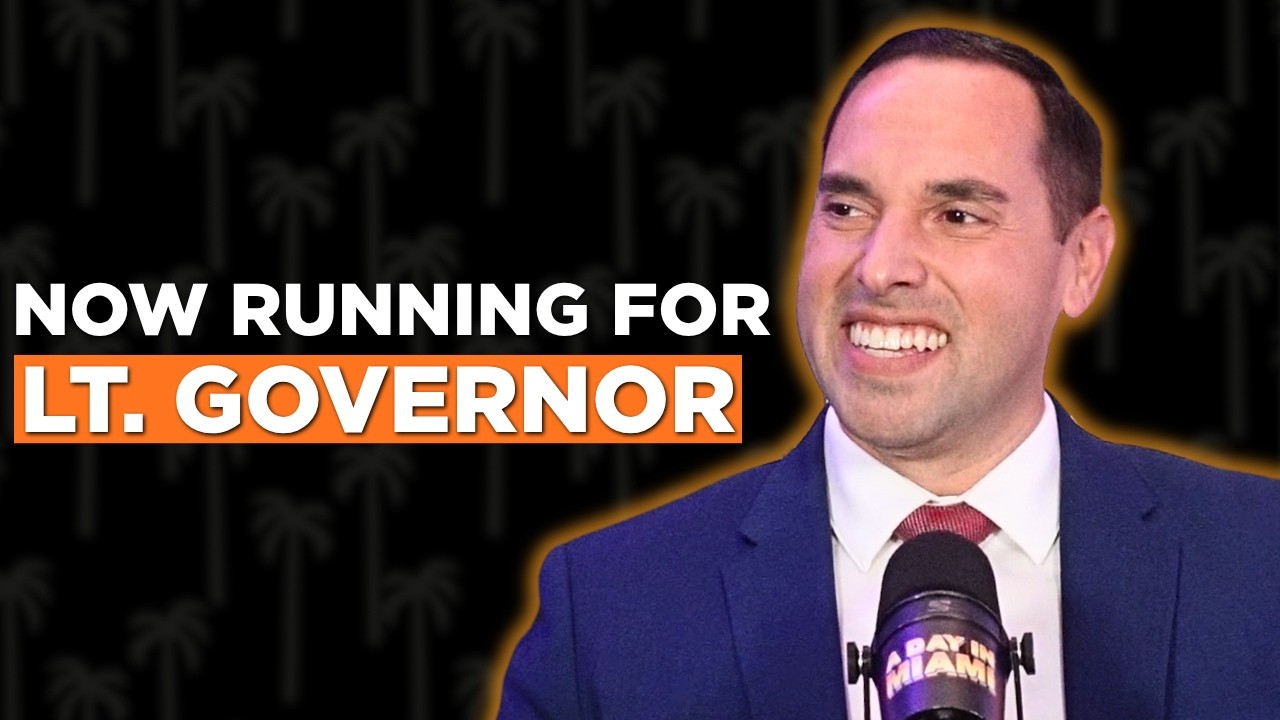
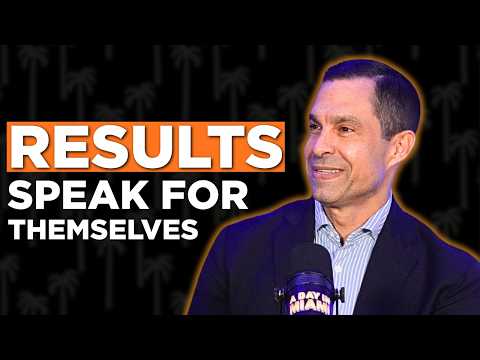
Hialeah Kid Who Lowered Your Property Taxes and Protected You From Data Centers
Bryan Avila grew up in East Hialeah and started knocking on doors for campaigns at 14 years old. Now he’s the Republican pick for Lt. Governor of Florida alongs...
About This Episode
He also talks about how Florida went from 10 million people to 23 million, why 550 people a day are moving here from other states, how insurance costs are starting to come down, and the data center bill he wrote that’s now being used as a model across the country. Plus his top 3 restaurants — Molinas, Grazianos, and Flanagans.
Vote November 3rd.
A Day in Miami Website:
https://adayinmiami.com/
Manny Alfonso:
Instagram: https://www.instagram.com/mannyalfonso8/
Kiko Suarez:
Instagram: https://www.instagram.com/querikoconkiko/
Eduardo Moya:
Instagram: https://www.instagram.com/mr_moya/
Follow Us! - A Day in Miami:
Instagram: https://www.instagram.com/adayinmiami/
Listen on Spotify:
https://open.spotify.com/show/20WEys6jxiliBCLoo9iSID
________________________
Produced by: Ben Schwede
Instagram: https://www.instagram.com/benthecreatorrr/
0:00 Intro
2:10 How He Got Into Politics
3:48 Serving on Local Boards and Knocking on Doors for His First Race
5:56 Getting a Call from Byron Donalds
8:18 9,000 Miles on the Campaign Trail
9:34 Hidden Gem in Florida
12:09 Why Everyone Wants to Move to Florida
16:26 The Role of Lieutenant Governor
18:27 Homeowners Insurance
20:09 Citizens Insurance
21:30 Helping Small Businesses
22:40 Tangible Tax
25:05 Sponsoring the Property Tax Reduction Reform Bill
26:20 How They Came Up with the Final Version of the Property Tax Reduction Reform Bill
30:27 Was Cost of Living Issue Created by Republican Leadership in Florida?
34:20 Remaining 5 Weeks of the Campaign
35:34 Data Centers
41:04 Election Results
43:55 Being Proud of His Roots
47:04 Top 3 Restaurants
50:53 Outro
Episode Highlights
It's been a long day. It's been a long day but listen we love it. Keep it coming. You know we we we we love the comments and we we either good or bad we just we like them anyway. So it's uh We we we we we like to bring out what's happening and we we tell it if if if they like it they like it they don't like it you know it is what it is.
Yeah I just really don't care anymore.
go do your podcast.
People were like DMing me on the side like you know that obviously the fans of the page are like man we're so sorry seeing all these comments and these about you guys and I was like whatever it doesn't really matter anymore.
You're never going to make anybody
Yeah.
You're not going to make all the people happy.
I say this all the time I say this all the time to everybody and when we put on Republicans we get called MAGA. When we put on Democrats we get called socialist so it's okay.
What about we bring Bernie Sanders what's going to happen?
Let's hear what he has to say.
[laughter]
Communism communism listen to me. We got a great podcast today because we we've got you know listen the good thing about this is that we're we're going to get the we're going to get the the right hand guy that is going to be next to you know what a lot of people are are saying is going to be our next governor. You know what I'm saying so with that we like to welcome to the show Senator Brian Avila. Welcome Senator.
Thank you it's a pleasure to be here pleasure to be here.
You know I know you you you you stopped a little bit with the campaigning to stop by here we really appreciate it very much so to tell you the truth. You know.
I think we should start with a question that we asked Byron which was how did you take that phone call were you surprised or His name
going to work backwards.
[laughter]
We're going to work backwards. Well tell him about the phone call then we'll tell him how he got into politics.
Yeah oh yeah yeah we start with that one why do you decide to do this?
That's That was the question we were going to say.
Yeah, yeah, yeah.
Because we always ask every political person because look at the heat we get just for putting people on and saying Why do you get into politics? You know what I'm saying?
It's a thing.
So, what is it Senator Brian Avila? Tell us when you decided and how you started into politics, sir.
Oh, man, I started So, I started in politics really at a very young age at 14 years old. I got involved in
14?
14 years old.
Okay.
I started uh you know, working on campaigns. Just really wanted to get involved in the community. Wanted to meet people and meet you know, meet neighbors and meet folks in the community. And so, I started knocking on doors for different campaigns at 14 years old.
That you were working for. Different people there.
Well, I was volunteering for them.
Volunteering. Yeah, yeah, yeah. Okay.
And so, got started early. Really met a lot of folks. Also really got in tune with what the issues were specifically in Hialeah.
Yeah.
Uh where we have a lot of seniors that live in Hialeah. So,
Shout out to Hialeah. Shout out to all the Hialeah people.
The city of progress.
The city of
And really just got familiar with the community.
Yeah.
I mean, very early on.
I mean, I always say because Yeah. Eddie sometimes tells me that man, you know what? I always get these ideas that maybe I want to someday run for politics. I go, "Bro, you know, when you get when you get bit by the bug you it's it's you're you're it's
Yeah.
You know what I'm saying? Because it's it's always there, you know? I mean, I I've been bit by the bug as you know, I've been out of politics. I'm doing this, but then all this is happening.
dragged back in now.
You get dragged back into it. But you know what? I I LOVE IT. LET'S DO IT, YOU KNOW? ESPECIALLY when you believe in something, you know what I'm saying? When you believe in something good, you really you you you know, you say, "Hey, eh eh para adelante." Tell us did you start straight? So, then you became then When did you become Did you go to prosecutor? Did you state house first and then state senator? Did you run straight straight for a state senator?
So, I first got involved
you even start in in Hialeah local politics?
Well, so I did I so I I mean, I started again at 14 years old getting involved in different campaigns in in the city of Hialeah. Eventually, that led to a lot of folks saying, "Hey, you should probably be a part of this board or that board." So, very quickly I was I was appointed to the planning and zoning board in the city of Hialeah
Very important.
to the scholarship board in the city of Hialeah. And so, that's how I got really involved in terms of the the actual inner workings of specifically local government.
Right.
And there at City Hall and just got familiar with the issues. And then in 2013 uh it was there was already sort of this you know, a lot of talk in terms of, "Hey, there's there's going to be a state representative or or a state house seat that's going to come up."
Okay.
In 2014, you should really think about you know, running. And you know, so threw my hat in the ring, knocked on 10,244 doors.
that's tough.
The best days were, believe it or not when it was raining. Those were the best days because I would go out there soaking wet knocking on doors and it was the best feeling in the world just you know, knocking on a door and talking and you know, talking to someone and them seeing me you know, just soaking wet coming to talk to them. You know, really left an impression.
This guy, man. He's grinding [laughter] it out.
Yeah, how many cafecitos would you get in these houses?
Get a café?
So, per day
per day per day
just imagine.
Per day I was hitting I was averaging around 70 to 75 doors per day.
Wow.
Now, I would start sometime around 12:30 in the afternoon and I would and I would end sometime around 7:00 to 7:30. And I mean, I would say on any given day it was anywhere from 10 to to 15 cafecitos.
You know, in Miami It's [laughter] you know, it's a high power way. Everybody me get a cafe. Get a cafe. Get a cafe. No, you connect with people over coffee too. 100%. So then how you know
So yeah, so then you got the phone call from Byron and did you expect it? You know, I know there was a lot of rumblings of who was going to be a part of this campaign who he was going to select and how that phone call go? How did you feel?
So I mean Byron and I have known each other for more than 10 years. We served together in the Florida House of Representatives for four years and then he went to to Congress got elected in his district and served in Congress for six years and so but we had always been talking like we we didn't just have a working relationship. We've we've been friends for a long time and so certainly when I got the call I mean it was it was early in the morning. I get the call and I'm I'm just kind of looking at my phone because I was like man, this is kind of odd that I'm getting a call you know, this early this early in the morning and so I you know, I pick up the phone and I mean I kid you not his his first words were are you ready? Right yeah
[laughter]
You know
But at this point there was a little bit of rumbling already you know like like was your name already being floated around? Yeah. There were I mean there there were there were anything you know, you can't hold these these names you know, the gossip around there.
There were definitely a lot of names that were mentioned. I mean all very very good you know, elected officials and and and community leaders. You know, so for me it was truly I was really really a pleasure and an honor you know, to to be you know, certainly to be considered but certainly to be on the ticket now. I mean this is I grew up. I was born and raised in in the city of Hialeah. So for me to go from you know, East Hialeah over to you know, being on being on the ticket you know, with the with the next governor of the state of Florida is absolutely an amazing ride.
Was it like a was it like a yes I'm down or what was your answer or did you say yes? I've got to go
my family about this. [laughter] Yes, I'm down like that.
So, for for me, I was like, hey, sign me up. I'm ready. I'm ready to go. Put me in.
Yeah.
I mean, it's it's that not only is it that military mindset, but it's also just that sheer highly agreed of like wanting to hit the ground running.
I like that highly agreed.
[laughter]
This is You get you get you get thick skin running for governor.
I highly agree, too, bro.
And this is what's considered as the most diverse ticket, too, no? As been ever run for governor in the state of
It It definitely is, and I would say on on both sides.
I think for sure on both sides.
On both sides. A lot of a lot of people and and we're every single stop that we go to, we're seeing so much energy. We're seeing the momentum continue to build. I mean, just since I came on the ticket, you know, 5 weeks ago over at the Freedom Tower where the announcement was made.
We were there.
Yeah.
Yeah, we were there.
Uh we've we've we've driven over 9,000 miles and we've we've hit close to 50 cities now.
It's crazy.
In In 5 weeks.
Yeah.
So, it's been It's been a I mean, just really an exceptional ride and a wonderful experience and just really meeting everyone. You know, I thought I had seen most of the state in the Florida Army National Guard.
Yeah.
But I I really didn't. I mean, now on the campaign trail is really where I'm I'm seeing everything. I'm seeing everyone. I'm meeting different people that, you know, are whether they're farmers, ranchers, uh electricians. I mean, I'm meeting everyone.
Which we have so many. I And to your point, I love the way you said that. Number one, I I got to shout out the fact that, you know, thank you for your service for being in in in in in the reserve. That's that That's means a lot. At the same time, there's so many places in Florida. You know, that people I I always say, sometimes you got to go and visit your own state. You know what I'm saying? Like, you know, tourism, you say, wait, where can we go? Oh, starting from There's so little hidden little gems around there.
Yeah.
And I forgot to ask this question to Byron in the last interview. Is there a place that you've visited that's like a hidden gem that you're like, man, like this is really cool. I never expected this to be like in Florida. I've never been here.
you were asking me about that.
Oof. Uh I mean, that's a tough question. Really, every single community is truly special. Like, it just adds to the greatness of Florida.
out that you're like, man, I didn't expect this here, you know, it's a really nice city.
Man, really, the Villages. If you go to the Villages
It It's
like Sumter County, like a lot of the counties that make up the Villages.
Yes.
I mean, you go to the Villages and you're like,
What part is that, by the way? Where Where's that?
This is absolutely spectacular. And it's you know, it's it's really it's it's mostly a retirement community.
is a retirement community, yeah.
Yeah, it's mostly a retirement community, and everything is just impeccable. Everything is absolutely beautiful.
Which, by the way, I I think that's my future.
[laughter]
No, no, no, no, no. Yeah, so I'm leaving. I'm out.
Yeah, but I have a life. I have a contract here. [laughter]
The Villages are a
Have you seen Weekend at Bernie's? We're going to be rolling this guy in here. Roll this.
The [laughter] Villages is a place to be.
Isn't it? I've I've visited the Villages many times.
So, I I went to just grab a bite at a restaurant there in Sumter County in the Villages, and you know, there's this long table, and there was 12 12 people sitting at the table, and you know, they recognized me, and they flagged me over. And they um they had just come from a softball game. It was 1:00 on a Thursday.
This is This is a 65-and-plus community.
Yes. Yes. They were They had just finished their their softball game, and they recognized me, and you know, they were like, hey, thank you so much for being here. This is amazing that you're here. And um you know, I took the time to to ask them, hey, so, you know, where where all of you from? Um and a lot of them within the past 5 years, so 11 out of the 12 people that were sitting at the table right had come to the state of Florida within the past 5 years.
Wow.
And they said that Florida is like no other state.
Bro.
And they had you know, they had come from you know, New York, Illinois, New Jersey, um mainly the Northeast. and
I mean they had said we we're we're just mad at ourselves for not having moved here sooner.
Correct.
And that's you know to hear that I mean that's that's pretty cool.
No, I mean it's the Sunshine State.
Well, listen on that topic, you know, we we spoke about with Byron about this too with the affordability.
Yeah.
Situation and the fact that we know that so many people do want to come down to Florida because I keep on saying it you can't You can't put a sign saying don't come here. You know, we're full. You know what I'm saying? You can't do that. And
As much as everyone in the comments wants us to you can't do that.
And and and at the end of the day I mean People want to come down because you know, the the taxes that we have here are still the best in the sense of people are not paying this not paying that where New York and California they're they're they're being you know massacred. You know what I'm saying? And God knows and and what's going on and everybody sees what's happening in in in in New York. And I don't care
Anybody can give me the comments whatever.
Sorry, you've got you've got you guys are screwed with that mayor over there. At the end of the day a lot of those people and not only that but you got really really smart people that have left. You know, we talked about this yesterday we were at at a great conference. What was it called the market
Market watch.
Watch Market watch by DDA. Hosted by the DDA in downtown. Top real estate producers and everybody and you ask everybody the same question. Why is it that everybody wants to move to Miami?
Yeah.
And they they all tell you the same thing. This is this this is what they want to be a place to be. So then again I get the affordability situation.
Yeah.
Um Like you know, I we asked Byron what what do we think we can do? You know what I'm saying? But we we have to work with it because
Yeah.
We just can't stop people coming to Miami.
Well, let me tell
Or Florida in general.
Let me tell you how great the state of Florida is. Right? So let's go let's go 28 years ago. 28 years ago the state of Florida was around 10 million people and today or 10 million residents, today it's over 23 million and we're seeing more than 550 residents from other states, particularly blue states that are moving to the state of Florida each and every day. Now, you go back again 28 years ago, the graduation rate in the state of Florida was around 60%. Today it is over 92%.
Mhm.
Our economy, it used to be behind the economy of Illinois. Today, our economy is the 14th largest economy in the world.
Crazy.
We are number one
In Florida. That's crazy. Yeah.
We are number one if you So, if you want to start a business, you're going to Florida because we are the number one business We are the number one state for business and for new business formations. We're also number one for manufacturing job growth. I mean, we've been in the in the in the country, we've been talking about bringing back more manufacturing jobs to the country. Yeah. Well, in the state of Florida, we're number one for that, for manufacturing job growth. We're also number one for higher ed quality. And by the way, all of these things, while at the same time, we have been reducing our state debt for years and we are now the state with the least amount of state debt per capita in the entire nation. So, when, you know, when we look at Florida and why people are moving to Florida, they're moving to Florida because we run a very efficient state government.
Yeah.
And I mean, to to, you know, kind of emphasize that, our state budget is a $117 billion, right? We're the third largest state.
A lot of money.
Well, the fourth largest state Well, I'll get to that one. The fourth largest state, which is the state of New York, their state budget is $265 billion. So, they are, when you look at it, right, budget per budget, they are more than double taxing their their residents and their businesses. So, that's why you see so many New Yorkers moving to the state of Florida and and overall, why you see so many folks from the Northeast coming to the the free state of Florida.
With all that being said and everything that we do here and your previous experience uh experience,
Do you think there's an opportunity for us to secede from the US and just become our own country? [laughter] And just like, "Hey, nobody else can come in." I think that's the only way we can like stop people from coming here, you know?
That's what Yeah.
You know me, I've always
You got the federal government coming in very quickly.
I've been a strong advocate saying we should just call it Miami, USA.
Yeah, that's it.
Listen, I I remember at one point, particularly during COVID, right? At one point during COVID, in order for you to get a U-Haul to go from Florida to California for a week, it was like $500. Now, if you wanted to go from California to Florida, it was $5,000 a week because everybody was trying to get out of California and come to the come to Florida. I mean, that's how that's how successful we've been, that's how successful um you know, our leadership has been.
No, we had This is our
Our leadership has been
No, no, I can't We had We had We had this We knew it, bro. We We We We had Yai over there in Hialeah. We had the other one in Miami Beach.
[laughter]
But we had all the We had all the crystal balls
It's a nice melting pot now. I mean, it continues It's always been a melting pot, but it continues to be to continue to grow. I have a question for you. What is the role of a lieutenant governor? If you can really explain the details behind what your operation would actually be uh in in helping the governor run the state.
By the way, before he answers that question, could we see if we can do a petition to get rid of this word lieutenant? I I don't understand that. I'm [laughter] I know I I asked this, but but what is lieutenant? It should be like vice governor. You know what I'm saying? Like vice president.
It'll be a good a good a good thing to look into.
Yeah, I mean, I don't know. Could you please look into that when we get there?
I will look into it.
You know what I'm saying? I still don't understand why it's lieutenant. Why can't it be major, captain? You know? Why lieutenant governor? I got to figure that I want to find that one out. I'm going to find that one out.
But I'll tell you you know, with regards to the actual responsibilities for a lieutenant governor, it is really to support the governor and the governor's agenda. Right? So, there is a you know, there's about 5 to 6 weeks before the start of legislative session and then you've got 2 months straight of legislative session and so throughout that window, that's when you know, that's when bills are proposed, appropriations are are proposed and filed. You know, so the governor obviously wants to and I'm going to say this right now um a Governor Byron Donalds in his first 100 days wants to really focus on everything and anything that deals with affordability.
Good.
Um so whether that's property taxes, uh homeowners insurance, automobile insurance,
Yeah.
health insurance, utility rates. I mean, really want to look at the entire gauntlet of the financial burden on the residents of the state of Florida. So, my job or a lieutenant governor's job would be to ensure that that agenda gets across the finish line and that, you know, it really go boils down to having really good relationships within the process and making sure that everything just lines up and that bills move their way through the committee process and end up on uh you know, the floor of each respective chamber.
You got to be working closely with both legislation and in the state Senate
Mhm.
on a constant basis. You know, I mean, I think that the the way you guys can probably help the fastest would be trying to lower homeowners insurance.
Yeah.
It's just I was looking at my insurance I was in the previous episode that I had with Alexis.
Yeah.
I just got my new insurance bill, $12,000
Yeah.
for insurance.
Yeah.
How crazy is that?
Well, we talked about that with with the congressman.
Yeah.
Yeah.
So, believe it or not in other states, it is increasing dramatically. In the state of Florida, I'll tell you So, 7 years ago, it was completely out of control. 7 years ago, if you look at all the insurance claims that were filed in the in the United States, 79% of those claims came from one state and that was the state of Florida. And so, when you have that many claims, a lot of them were were very frivolous.
Yeah.
And you know, obviously
Majority from Miami?
[laughter]
And majority from Hialeah?
What what
Why, brother? Why?
What ends up happening, of course, is like the insurance companies are like, "Man, you know, let me just get out of Florida because this is just it this is a ridiculous environment." And so, over the past 7 years, what we have done is we put in numerous reforms to tighten that up. And what that has led to is 7 years ago, again, it was 79% of all the insurance claims in the United States came from Florida. Today, it is 41%. And so, we're seeing that that trend continue where, you know, you have lower and lower amounts of frivolous lawsuits and claims that are filed.
Mhm.
And it's leading to a stabilization of the insurance market. You're starting to see more insurance companies come into the state of Florida. And the insurance commissioner for the state of Florida just last week announced that 70% 70,000 policyholders in the state of Florida are going to see a reduction.
Oh, that's amazing.
But, can you explain to me Citizens Insurance? Isn't that a state-provided insurance company?
That is that is a state-provided in or a state a state entity or a state-provided insurance. Now, obviously, if something were to happen, and let's say the net of that insurance company, Citizens, right, were were to expand and capture more people, if there are multiple storms and numerous claims, I mean, it's our residents that are paying for it. And so, what it what we're doing and what we've been doing is sort of shrinking that net and creating more competition in the market in the marketplace and attracting more companies, more insurance companies from outside of Florida and enticing them to come into Florida and provide their services to our residents. And thereby, you know, obviously, creating more of a competitive environment where they are lowering their prices because they're all competing for the same policyholders.
So, you guys are going to push to have more insurance companies come in?
Yes, we want we believe in the free market and we believe in competition and that's what's made our country and our state really great. So, we've got to make sure that we continue with those principles because it's going to lead to a long-term benefit for our residents and it is also going to take us off the hook as residents for, you know, paying for, you know, significant damages.
I mean, on on on and continue on that one because I'm I'm interested with a lot of our viewers, right? Are a lot of entrepreneurs starting entrepreneurships?
Yeah.
Small businesses.
Yeah.
What what what can we do to help out? People with with with starting their little small business.
Yeah. So, for one, obviously our our tax structure here in the state of Florida is extremely competitive um or extremely attractive. We uh we don't have a a state income tax. We don't have local income tax. We actually just in these past 2 years, we have eliminated the business rent tax, which has provided a lot of tax relief to a lot of businesses in our state and particularly in our community. So, we are continuing to
Entrepreneurs.
Yeah. We're continuing to make sure that we are lessening that financial burden across the board. Uh not only for our businesses, but for our residents in general. I mean, over the past 5 years, the state of Florida has returned more than $5.5 billion to the Floridian because at the end of the day, our our fundamental belief is that hey, every single dollar that government spends if first came from someone's paycheck.
Yeah.
And we need to be good stewards of that.
Yeah. You know what? I have a proposition. Maybe you could put it up there. I think you're in the right position, [laughter] you know. There's a tax that I hate, you know, and I hated it for a long time.
everybody says there's a lot of taxes
we all hate.
of taxes that we all hate.
understood it, you know, maybe you can clear it up for me. It's called tangible tax.
Okay.
Right? So, they come back every year, they assess what you have in your office.
Your tangible property?
Yeah. And then they re-tax you on it.
Yeah. Why?
Yeah.
Like because you're a tangible person?
[laughter]
But that to me is so crazy, you know? I I've never understood why they do that to us, you know? It's just, you know, the tea party, you know, taxed enough already.
Well, every every year I can tell you we evaluate the tax code and I mean, just like I mentioned, these past 2 years we eliminated the business rent tax. We were the only state that had that tax. So, we are constantly making strides to try to provide relief. Uh I can tell you right now on the ballot, you have amendment two and amendment two deals with tangible um property for uh farmers.
Oh, I didn't know that.
So, that's a big I mean, that's a big item particularly for our farming community um because obviously they are the ones that provide the food supply for 23 million people. So, anything that we can do to assist them obviously to stay in business and to provide that food supply is incredibly important.
So, this is sorry, so this is to remove the tax on them going on a tax and taxing their their the machinery and everything that over
So, it's So, it's specific items that are laid out. Um in general, it is, you know, their farming equipment. Yeah, farming equipment. Yeah.
Let me tell you, you know, out of all the things we've done here, we should just do I think that you know, we got to do this before ballots already out, obviously, but we still have people going out to to to vote in November. What is November 2nd?
November 3rd.
November 3rd. So, at the end of the day, we should do somebody explain because it is incredible of the amount of people that call to say especially the Hispanic
Yeah, yeah, yeah.
I wanted to ask you, do you get that when you're walking?
A lot.
And now that you've been walking, have people go and listen, you know, Senator, what what what is this that you have to you end up explaining to people what it is because some people don't understand what what is on the ballot sometimes. It's It's It's crazy to me. What has been something you've seen when you that you've been walking out What has What has really been more of that, you know, common denominator that you've heard from
Give us your top three issues that you have
Yeah, that you've really been knocking and and and driving all these places.
Yeah, I mean it's it's definitely property taxes, number one.
well. Which that's Amendment 3.
That's Amendment 3.
Which you are?
I'm and I'm in favor. I sponsored it.
Perfect. We've got the sponsor on the table. [laughter]
For people who don't know what that means, what is a sponsoring an amendment or or how would you call it? A bill or no?
A an amendment?
A bill or legislation?
Legislation? Yeah. What does that mean?
So, that means that I got the I got the legislation. I am I am filing that legislation. So, I am the one that is responsible for that legislation moving through the committee process and eventually getting uh through the floor of the respective chamber, in my case the Senate chamber, and then ending up on the governor's desk. In this case, it's an amendment, so it wouldn't go to the governor's desk. But, um but yeah, I am basically responsible for that bill making its way through the process.
He's the guy that said
So, you put it you put it on the ballot.
Right.
I Well, yes. And and my counterpart on the house
But, he's the one that has to take it to the people and tell and the other colleagues say, "This guy's crazy. What are you talking about, you know, doing this?" You know, no, no, but listen to me, you know, take it take it take keep on moving it to the house.
then you're the right person to ask this to.
Oh, boy.
Right, here we go.
So, I was told in the beginning, and I'm kind of curious on the process of how it went. I was told in the beginning it was completely eliminate property taxes all the way through, and then you guys kind of like, you know, I guess negotiated, went back and forth, and then you ended up with what's happening with us now, which is a the 250,000 threshold that jumps up after a year or so.
Yeah.
Can you guide us in 250?
Can you guide us through the process of like how it originated? What was the original idea and and how you got to the final uh amendment uh is coming on the ballot?
Yeah.
So, you know, first and foremost to to go over Amendment 3, the first year it jumps, your homestead exemption would jump to $150,000. The second year it jumps to $250,000, and then the third year and beyond, it goes to $250,000 plus CPI, right? So, adjust it for inflation.
I didn't know that part.
So, that's that's the time frame of that. Now, I will tell you, certainly we've been talking about, you know, property tax relief for numerous years, and we've been talking to local governments and mentioning to them like, "Hey, you have to look at your books. You have to look at your budget, and you have to live within your means." Um you know, I'm sure that everybody has a lot of wants, but what we are I mean, what you really need to take care of first and foremost are your needs.
Yeah.
And so, you know, we've been having that conversation in Tallahassee for some time. Uh we've been having that conversation with the governor's office, and so he developed that that proposal, and um you know, the House as well as the Senate put that proposal before our members, and we had those conversations in the committees, and then it ended up on the floor, and you know, had an extensive debate on the floor about I want to say four four or five hours, and um and then now it's on the ballot for the voters to decide, and now in November, it has to reach a threshold of of 60% plus one.
Got you.
Right, in order for it to become uh to become the law and to become part of the Constitution.
Was it ever close to uh not happening?
Listen, there there's been a lot of uh you know, there was I wouldn't say that it was close to not happening. I would say that there was a lot of a lot of input, a lot of feedback, particularly from uh a lot of the local jurisdictions, a lot of law enforcement organizations, a lot of uh fire departments,
municipalities,
municipalities, right? There were there was certainly a lot of feedback and and and a lot of concern. But one thing that we've always told them is, "Hey, if you're running if you're running a good operation, if you are running a lean operation and lessening the financial burden on your residents, I mean, you should be able to weather whatever comes, right?
And listen, at the end of the day, what you're doing is helping a lot of people.
Yeah.
A lot a lot of people that have, you know, worked all their life to pay their homes and still don't own them.
Yeah.
Because of property taxes.
Yeah.
You know what I'm saying? And they still have to get worried of people that just live on that check every month and they have it, you know, pinpointed to the to the T of what they can spend to say, "Oh, how how am I going to put up a part, you know, 100 200 bucks every month to get to whatever number I have to get to."
Well, imagine our parents and grandparents
100%. That's what I'm That's what I'm talking about.
day and night
100%.
to really pay off their house.
Yes.
And a lot of them are still they're still paying property taxes.
MENTALITY.
[laughter]
YOU KNOW, SO I AT THE END OF THE DAY, voters are going to decide what uh what happens here on November 3rd, but we want to make sure that we are providing them with that option.
Listen, I feel that one's going to overwhelm me personally.
so too, from what I see.
There's I know that's 60-plus. I know I know stranger things happen. I I know I get [laughter] it. I get it. I get it. I get it. I get it, you know? I mean, but I that would be one that really really really would shock me, yeah. You know, in this sense, because a lot of people like to vote with their pocketbook and their checkbook. You know what I'm saying? It's it's
Listen, the cost of living in in Miami is the same in Miami Miami-Dade County is going up.
Yeah. Yeah.
And a lot of that, you know, we can we can certainly tackle in terms of like from a government perspective, lowering the financial burden on our residents, especially our seniors.
Yes. Yeah. So, talking about that,
The villagers will be happy.
This is something [laughter] that I see in the comments and I see I could see how people could correlate it. I I have my own personal thoughts on it. Um but
hear the let's hear the comments first before your personal ones.
Obviously, affordability has been an issue. You know, costs have been rising. A lot of things that I see in the comments says, "Hey, if that's been happening lately, we've had a Republican leadership here for decades or so, you know? So, they associate the cost of living rising to the leadership."
Yeah.
In my mind, I'm like, "Hey, if it would have been Democrat leadership, I think it probably would have been worse, YOU KNOW?" BUT,
OH, YOU'RE GOING TO GET SO MANY HATERS right now.
Can you clear that up?
There it goes, the comment section.
[laughter]
That's my my personal thoughts, and that's based off what I see in California and New York, you know? I'm going off of that, you know? That's that's the good comparable one. So, then I you know, can you clear that up cuz I see that in the comments. "Hey, you know, you're going to vote for Republican again, but, you know, the cost of living's gone up, and you see everything that's happening, and they've been in leadership this whole time."
Yeah. So, I I I would say there there's a lot of things that originated at the federal level that have impacted our state. Um you know, I was talking about our state debt being the lowest in the country, right? Our state debt per capita, per person right now if if I was to divvy up the uh the state debt, it's about $800 per person.
Wow.
But, if I were to do that on a national level, per person, it's over $100,000 per person. You know, so there's there's a lot of things, and and and by the way, you know, it kind of spreads in terms of who's responsible for that, like both parties have been in control uh in DC at numerous points. Um you know, I think I think certainly Republicans have been a little bit more engaged in in terms of trying to lower that that debt because we understand obviously that we need to live within our means in order to to really be able to function. Now, you know, you we also need to focus on inflation. I mean, inflation is is a big issue, and it leads to uh increases in a lot of things, right? Whether that's food, whether that's, you know, cars, or I mean, we can go down the line of how inflation impacts every every single sector. Inflation, you know, we've been we've been running hot for a long, long time, right? And then obviously you know, the conflict uh in Iran in order to prevent them from you know, from getting nuclear weapons.
Talking about that, one of my buddies was in California. He sent me oh, Keyvon from Keyvon from Xfinity. He sent me a picture. You know how much you're paying for gas over there a gallon? $9.
I heard $9.
Yeah.
Right? I think also too
We'll take $4 all day. So let me say
$9 a gallon.
So what what you see in blue states is that because they don't run a an efficient state government, they have to add taxes to gas.
Yeah.
And so whenever you go to a blue state, whether it's California or New York, you're going to see the price of gasoline much, much higher. In some cases double what we what we pay here in the state of Florida.
Yeah. I also think you know, leadership has ran this state so well, you know, in my opinion even through COVID with the way we navigated it that we ended up you know, hurting ourselves because we ran it so well. Everybody wants to move here, you know.
Listen, even even Democrats know the leadership in in Florida.
well and everybody just floods to you, you know, so
Listen, I I've served with with with colleagues that are Democrats in Tallahassee and I Well, well, I often ask them, "Hey, so what brought you what brought you to Florida?" You know, they're usually from from New York or New Jersey. "What brought you to Florida?" "Oh man, Florida's tax code.
Yeah.
It's great.
The tax system, the tax structure.
Yeah.
You know?
It's the best.
Yeah. And it's you know, so even
are you in that party?
Yeah, yeah.
[laughter]
You know, then then they tell me, "Hey, please don't mention this to anybody."
Right, of course. This is on the on the down low. On the down low. You
That's okay.
And so Brian, talk talk to us. Give me a little how much what more do we have to do? I know there's a lot between now and November 3rd. So how many more places do you have to travel?
Well, I mean if in 5 weeks we've done 9,000 miles and close to 50 cities, I mean right here we've got 5 more weeks to go. And right now you mentioned, right, where absentee ballots have gone out and they're continuing to go out each and every day. We've got early voting coming up in in 2 weeks and then we've got election day November 3rd. So I would tell you we're probably going to have to get close to doing double
Now now you
what what we put in for these first 5 weeks.
Yo, Miami-Dade County still purple? You guys would consider purple or
Miami-Dade County flipped red.
Flipped red, yeah.
So based on voter registration, we are we're a Republican county. Uh Palm Beach Palm Beach County is not too far away. They're about 30,000 uh you know Republicans away from flipping Palm Beach County red.
Completely red.
So you know you're seeing that trend.
Broward is more
Broward is is very blue.
Yeah, very very
And Tampa?
Uh Hillsborough, I believe went Republican and it flipped Republican recently.
Okay.
Pinellas as well.
Which county?
Another question that I see a lot in the comments, you know, is the situation with the data centers.
Yeah.
Okay, there are people naturally worried about it, you know. Um obviously we know that we need super intelligence, you know, we want to stay ahead
Yeah.
in the game. So I you know and everyone uses it every day, you know, so
Everybody should I love that people say, "Oh my god, we don't want that." But everybody uses it. Everywhere you go everybody's on chat chat chat chat chat chat doctor chat diet chat everything. Even chat dating. I think chat dating is out now. Yeah.
We're we're not going to be able to get away from this, but I know that there there that, you know, you've been a big proponent of regulating it in some cases. So I wanted you to expand on that.
Yeah, so I sponsored the bill.
Oh, wow.
Guys been busy.
[laughter]
Guys been busy.
Let's go, man.
He's he's a workhorse.
There he is. He's been busy.
This is WHY THEY CHOSE HIM.
So just, you know, full disclosure, I'm very low-key. I'm just a humble guy. I really just like to get in, work and and and get my work done.
We like that.
behalf
of the residents. So, you know, I was very proud to sponsor Senate Bill 484, which is now actually being used as a national model for how to how to create some parameters and protect residents in states, you know, from higher utility costs and protect natural resources. So, I'll tell you with Senate Bill uh 484, it does three main things. The first one it it it restates that local governments are the ones that are responsible for the local zoning. So, if if a community wants a data center,
Right.
that that local commission or, you know, whether it's the city or the county, they are the ones that are going to be responsible for that.
Got it.
Um based obviously, I would hope, taking into account feedback from their residents.
Correct. So, it's not going to the people don't vote on it, but the county commissioners in their in their area vote for it.
The people that they elect into those positions for, you know, city commission or county commission, they're the ones that are going to be making
and all that for that.
Correct.
Got you.
They'll be the ones making the decision. It won't be Tallahassee. Right? So, if a community wants it, that commission will, I'm sure if the community wants it, will approve it. If the If the community does not want it, then that commission, more likely than not, will will not [snorts]
there's a case where the community doesn't want it and the commission does put it in, can the state come in and say, "Hey, this is not happening here." Is that possible or not really?
So, we again, in that bill, what we did is we said, "Hey, local governments, this is up to you. This is based on the local elected officials that you have chosen um to make that decision. Now, what I will say is that that 484, the other two things that it does is it also protects the residents around, if there is a data center, it'll protect those residents around the data center from seeing higher utility costs. Right? So, their their electricity bills should not be going up. And then on top of that, it also protects the natural resources, particularly our water, which we've made so many investments in throughout our state's history. But in particular in these 28 years, we have I mean, we've been really just surging a lot of resources into protecting and revitalizing a lot of our streams, the Everglades, Lake Okeechobee. Uh our water is essential to Florida. And so, we've got protections in there for our water. Uh so, they would have to go through a pretty rigorous consumptive use permit in order to use that. And in fact, that it encourages data centers or those companies to use reclaimed water before they even think about using, you know, really good quality water.
In- incredible. Incredible.
I mean, listen, it makes sense for the, you know, for your local government to make decision. Because at the end of the day, you know, local government is the one that has to deal with the residents. And the residents, who are they going to you know, they're going to prefer saying, "Hey, my local commissioner, you are you going to listen to me or anything?" But at the end of the day, I feel that's something that a lot of places have to really, really start looking into because again, it is the future. Um I think it's it's inevitable that it's going to stop. Um you know, it's not going to you know, because it's just like whatever, you know, that came in. You you you have to be up to par with what's going on in the world.
Elon Musk has some good ideas uh putting data centers like in space. You know, it's a lot cooler, too. You know, just having it kind of like satellite so.
We actually we actually did a a tour of a I mean, a pretty cool tech hub um that is military focused. So, it's more so guided on uh defense and aerospace. And there's a couple a couple of companies there that are focusing on just that. So, I mean, really space is sort of that next frontier.
That's what I'm saying. We've talked about it in this program many times with Robert. That, you know, Florida is going to be up there with the whole aerospace the aerospace situation here. I mean, because we have the area.
you have any like teasers or any any information that we may not know about aerospace?
Is Elon Is Elon looking at Florida, Senator?
[laughter]
Listen, Elon's Elon's you know, obviously somebody that is that is incredibly creative.
Yes, man. Yeah.
So, you know, I I would I would never I would never doubt, you know, if he's thinking about doing something, I would not doubt it.
Yeah. Have you met him before? No?
I have not. I have not.
I'm thinking of just putting like a a tracker. Like just following him every day and see what he's doing.
He did [laughter] that. Somebody did that to him.
Did they?
Yeah, they were tracking his plane. He They were trying to complain and he got him shut down.
Oh, Okay, too late.
But man, I don't understand how I mean, that guy is brain needs to be a storm because he's literally
It's the ADD.
He is a industry in the industry leader in multiple industries, you know, like
How?
you know?
Listen, um Senator, let me tell you. So, basically, um how do we see everything you know, you know, November 3rd? At what time are we going to get results? We're going to you know, you know, Florida's the Florida Florida
Florida is really good
Yeah.
in terms of elections. We are really good at conducting our elections. And we made tremendous strides in making sure that every single vote is counted
Yeah.
in a timely manner. A lot of states that we've seen across the country, for whatever reason, they just can't get it done. So, you have to wait till the next day to find out what the results are.
never really understood
I've never understood I wasn't It's not my state. I was a little upset, you know, but whatever. With Spencer Pratt. What they did to Spencer Pratt when he was running for the
Yeah. Yeah.
It was like 2 weeks to count ballots and then all of a sudden you're getting ballots in that are 100% won. I don't know, man, you know. It's very crazy, you know, that when you see things like that and then you see Florida, a whole state and 24 hours
to Cali.
Yeah. In California, I mean, three decades three or four decades ago, it used to be the California dream. And for a lot of residents, it's become the California nightmare.
I mean, especially his commercials were really on the fact of of of that. But you know, it's so it's so good that you say that because I was seeing that in in a in a I'm not going to say what uh news channel, but it kept on saying, "Well, what is it about Florida that they do this so quickly?"
I mean, and then I think the guy said, "No, what is it about you guys that takes so long?"
So long. I mean, it's that's the question. What is it about you guys that takes so long? Why don't you What part of like, you know, just voting don't you understand? You know? I mean, at the same time, I the great thing about here is where were we where we were seeing election results for the local
Oh, we were all over.
No, but we remember how quick that you even mentioned to me, "Oh, didn't the things just close and we're seeing all the results coming in already and like in 20, 30 minutes, so-and-so won, so-and-so won, this one won." This is going for a runoff, but you were looking at the all the precincts and
But you already knew.
Yeah, you had an idea. Yeah, the idea.
That's just crazy.
I mean, maybe the county was counting really fast, too.
Maybe the county's always
And I hear now more people are using mail-in ballots, too, right?
Yes.
No, that's nice.
Little shout-out to our supervisor of elections to our people.
Yes.
Shout-out. I mean, really a lot of the elections supervisors
Yes.
across the state
yes.
are are really doing a a magnificent job.
have Alina here next week to to give us a little rundown of how, you know, what what's the process here, you know? Is it the fact that you need a woman in that in that in that position to get in there and say, "Let's go!"
She She definitely She definitely
Cuban women are worse.
[laughter]
She definitely brought a lot of energy to the office, though.
Alina's Alina. Listen, um I'm I I again, this is for me I I always say this is um uh it's great because growing up in Miami and the sense of seeing governors, lieutenant governors, we were going to change the vice governor. In the sense of being Miami or Florida homegrown, you know, people we we we we love Jeanette, you know, and say being at FIU. And now, you know, you you you'll be there and stuff like that. That's just, you know, how this crowd it is a factor of a of, you know, Hialeah kid having dreams and saying and I think that the best thing that we bring to this program, even the ones that were good or by common sense is that, listen, anything can happen here.
Yeah.
Anybody can Anybody can just wake up and say, "I want to take up an issue. I want to run." And I always say, "What's the best advice you can give to all those 13s and 14s as you started?"
I'll say first and for- first and foremost, our parents and grandparents were the ones that gave us an opportunity, right? And that's the same opportunity that Byron and I want to ensure that every single family in the state of Florida has. I mean, every single morning I wake up and and I thank God. I really thank God that I I was, you know, born and raised in the city of Hialeah. Uh this is a kid that would walk to uh Babcock Park in cleats, full gear, and, you know, from there after practice, I would go over to St. John the Apostle Catholic Church for, you know, my Catholic courses, and then walk all the way back to uh, you know, 17th Street in East Hialeah. You know, for me, growing up in the city of Hialeah not only gives me so much pride and so much joy, um but to to be able to represent the city in any capacity, whether it's as a state representative, as a senator, as now a lieutenant governor nominee, for me, it's it's truly something that is so humbling and it gives me so much joy. Uh and I I I have to go back and think about my parents. I mean, they gave me the opportunity to succeed. I We didn't have We didn't have a lot, but we had just enough. And that just enough was the opportunity.
I don't know if you ever said brother, I don't know if you can say better than that.
So [laughter]
I mean, you know, come on. You know, I went to Ben Shepard Elementary.
Oh, okay.
By Milam Dairy Park. [laughter]
You know.
And I went to Snow White, the little Snow White.
Yeah. We knew there was something there.
Snow White uh little What was it? The pre-K or something?
Yeah. Yeah. Is it still there?
It's I think it's still there. It's still there. It's going strong.
It's going strong.
They're uh right right across the bridge from Miami Springs in Medley.
Yeah. Yeah. Yeah. Yeah. Yeah. That's crazy.
Okeechobee.
Well, listen, Senator, I'll tell you this much. Um we can't wait for November 3rd and and can't wait to see the the how the elections come out. You know what I'm saying? And and with that, I leave you with the sense that this is going to be really I tell you the biggest hardest question you're going to have in in your political history.
Yeah.
And and your political career right now with this with this question.
And this is going to be a gotcha question.
really make or break your campaign.
Here we go.
Ready? You got to let us know your top three restaurants.
There we go.
[laughter]
Starting with number three and why. You may make a couple enemies out there, but it's okay.
By the way, you can mention maybe you did a pit stop somewhere around Florida.
Yeah.
Just saying.
so
Maybe we should give him a pass and like your top three here and then did you stop anywhere exciting around the city?
it could be whatever you want. The governor gave like fast food spots. He's like, "Listen, right now I'm in campaign mode. I'm going fast food all day." So, you can give us Hialeah ones, whatever you like.
So, I have I have to start out with saying this, right? And and I say this on the trail whenever whenever I meet, you know, a Democrat or or an independent voter. Um because I think the general expectation is that hey, we have to agree 100% of the time. And I often tell them I don't agree with my wife on what we're having for dinner.
That's a good point.
SO, HOW SO, HOW ARE WE How are we going to How How going to agree 100% of the time?
Yeah.
Um you know with with my top three, I have to start out with Molina's.
Molina's number three?
And Molina's is great, man.
And in East Hialeah, it's a staple.
It is.
What are you eating?
Oh man, for me it's it's vaca frita.
Vaca frita's amazing, yeah.
Vaca frita with moro and tostones.
yes, yes, yes, [laughter] yes, yes. It's a true true Cuban dish, baby. All right, number two.
Number two. Number two, I would have to say Graziano's.
Okay. Oh, shout out to our people.
Melissa.
We love Graziano's.
Grazi's Grazi's got it. I mean, got to give them a shout out.
Yeah, I know. They and they did a great job during World Cup hosting parties, yeah. That was really nice.
way, great people, great family because they're all generational.
Yeah, good people.
working there.
Yeah.
Whole family's working.
Very good people. No, they have our producer loves the empanadas there. He is starting to look like an empanada, but
[laughter]
Well, we're we're we're in that season. We're in that season where we we gain a couple
Hey Jay, I got you. I got you.
[laughter]
Yeah, we know we know where his empanada goes to. Go ahead.
Number one.
NUMBER ONE IS FLANIGAN'S.
[screaming] [laughter]
FLANIGAN'S ON THE TOP LIST. OH, we done What was the thing that we did for
We so we went back every episode and looked at who voted their top three and out of we you know added them all up and Flanigan's was number two. Number one was Sonny's.
Number one was Sonny's.
Which we haven't heard in a while, but you know
It's okay.
Yeah, but yes, Flanigan's is always up there. Um I know that there's like a petition I saw online. I know they're probably messing around. They want Flanigan's at like Virginia Key now.
Oh, really? Why not?
They want a waterfront Flanigan's. That's what I heard they're pushing for. It's crazy.
Why not? I think that'd be great.
Listen, bueno, bonito, y barato.
Absolutely. You can't be better than that, man.
I do have an honorable mention.
Let's go.
Okay, we'll take it. We'll let
That honorable mention is a very it's a local spot in Miami Springs. It's called Ceviches by Divino.
Oh yeah, yeah, yeah, yeah, yeah. I see that. Yeah, yeah, very good.
If you're in town, definitely go there.
Yeah, yeah, yeah. I haven't been there.
Have you been to La Olla in Hialeah?
I have. I have. I have. La Olla in Hialeah. You got to go.
That's a great spot, too.
Right there on West 4th, on 3rd, yeah.
See, those are the Those are the ones that we like.
Those are the
The little ceviche by you.
Yes.
You know, those little
[laughter]
Now that guy's going to get swamped with people like, I want to try. What is it? Ceviches?
It's ceviches. Ceviches and
and wine.
Ceviches, wine, uh I would definitely recommend uh jalea or chaufa. Chaufa is like a
Yeah, we love chaufa.
It's It's like a a Chinese Japanese fusion rice, and it is absolutely exceptional.
You know who does an amazing chaufa that not a lot of people realize?
Yeah.
Floridita. They do an amazing chaufa and you wouldn't expect to have it there.
They do.
Okay.
The good thing is is that anybody going route here for dinner now at this time?
I'm starving.
Every time we No, no,
[laughter]
every time we say this. The guy just ate 20 minutes ago.
Yes, yes, yes.
Senator, what Listen, we are so excited you stopped I know you took time out of your busy schedule to stop by A Damn Miami, brother. We really appreciate it and we really appreciate and our viewers appreciate it. You know what I'm saying? For you to be here. And we hope to see you in Tallahassee.
Yeah.
No, we'd love that and I and I think we should do an episode of A Damn Miami in the governor's mansion. Say no more.
[laughter]
We're planning We're planning to go for day dates as well.
Yeah.
Yeah.
He's going to day dates.
Although, it'll be myself and Byron.
No, we'll do We'll do We'll do a four-person panel.
There we go.
That'll be a four-person panel. Thank you guys so much, Senator. And remember, you got to go out Whatever you do, whatever you decide, you got to go out and vote. And remember how we leave it, go out and live it, love it, make it a Damn Miami, and go vote.
Never miss an episode
Subscribe to our podcast and get the latest episodes straight to your favorite platform.
Subscribe on SpotifyMore Episodes
View all 52:42
How to Actually Get Your Child Accepted Into a Top Miami School
Nov 5, 2026
 1:01:52
The Woman Who Has Dedicated Her Life to a Free Cuba | Ninoska Perez
Nov 2, 2026
 42:08
The Judge Candidate Breaking Down How Our Courts Really Work
Nov 1, 2026
 57:28
Why Coral Gables Is Florida's Best-Run City
Oct 29, 2026