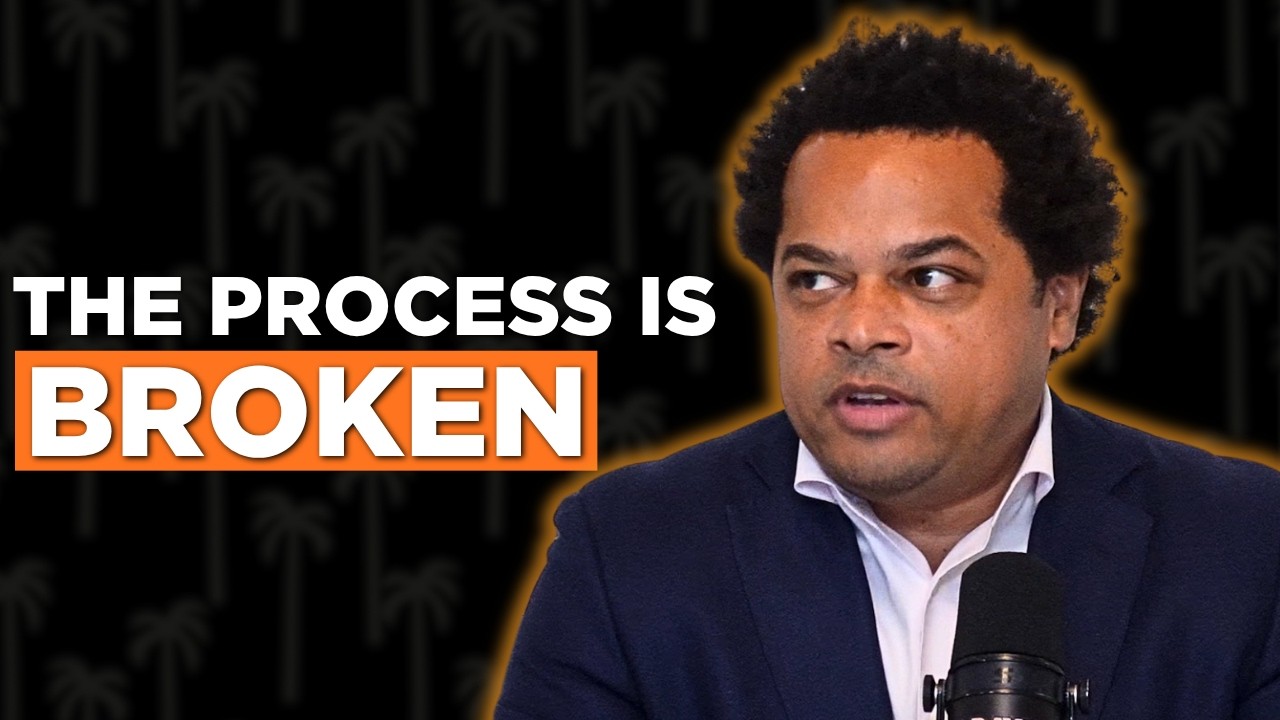
Commissioner Explaining Why Virginia Key Has Been Stuck for Years
Keon Hardemon currently serves as a Miami-Dade County Commissioner and previously served as a City of Miami Commissioner and Chairman — which means he was there...
About This Episode
He also covers the housing challenges facing neighborhoods like Liberty City and Overtown, why the city was intentionally building housing that pushed out its own residents, the sublease numbers most people haven’t heard about, and why Virginia Key’s waterfront could be one of Miami’s greatest assets if the right project moves forward. Plus his top 3 restaurants.
Vote November 3rd — and know the full story before you do.
A Day in Miami Website:
https://adayinmiami.com/
Manny Alfonso:
Instagram: https://www.instagram.com/mannyalfonso8/
Kiko Suarez:
Instagram: https://www.instagram.com/querikoconkiko/
Eduardo Moya:
Instagram: https://www.instagram.com/mr_moya/
Follow Us! - A Day in Miami:
Instagram: https://www.instagram.com/adayinmiami/
Listen on Spotify:
https://open.spotify.com/show/20WEys6jxiliBCLoo9iSID
________________________
Produced by: Ben Schwede
Instagram: https://www.instagram.com/benthecreatorrr/
0:00 Intro
1:18 About Keon
1:53 Why He Got Into Politics?
5:33 Coconut Grove Development Pushing Out Locals
9:45 Virginia Key Redevelopment
12:28 Why the City Put Out the Request for Proposal
13:55 People Saying Current Deal is Bad While Current Operator Got His Deal in the 80s
14:44 Gramps Leasing a Small Space to Lazy Oyster for $20,000/mo
18:13 Why Has It Taken So Long to Renovate Miami Marine Stadium
20:55 Manny on Why the Process with Virginia Key is Frustrating and a Bad Look
23:34 Why the City Kept Rejecting the Winning Bid
29:04 What Will Happen If People Vote No on Redeveloping Virginia Key
33:18 Why Keon Hardemon Will Vote Yes on Redeveloping Virginia Key
35:33 Top 3 Restaurants
40:10 Outro
Sir.
Yep.
Speak.
We're back.
Well, but get off the phone.
We're putting out by We're focus We're we we're focusing on a great in a in another great podcast today. More informative podcast.
This is a very good one
for all the voters of Miami. We just keep on delivering a little bit more of information every day and day to make people a little bit more astute of what's going on.
Yeah, there's a lot of uh I don't know if you want to call it misinformation out there. Um I definitely see
that's a little word, misinformation. I see a lot of um thoughts that I don't think are appropriate in this case. Um people don't have the facts right and I think that's been one of the biggest situations here. Uh people are appealing to the emotional side of the community instead of you know the I guess legal uh side how things should be handled uh within the city of Miami. Um so we brought a former city of Miami commissioner
chairman of that time as well
chairman as well. Welcome, commissioner. Welcome to to the day in Miami podcast. We got here Keon Hardman. How are you, sir?
I'm blessed.
That's that's that's that's that's
Are you also happy that you're out of city Miami, too, at this point? I mean, it's been a couple years now, but
I'm born and raised in the city of Miami, so I'm a Miami guy. And it's it's nothing like having a little scrap in you. So, yeah, I don't mind it.
Okay, good. Good. So, for those people who may not know you, uh, tell the viewers a little bit about yourself.
So, I am Kiana Hardman. I served in the city of Miami for about seven years. Four of which I was the chairman. Uh before then I worked for the public defenders office. So I was a public defender. Great times doing that. Graduated from University of Miami School of Law Fan with my bachelor's and masters in business administration
and I worked for Fizer before I started in the whole sort of political legal field. Uh currently I manage my own law firm the law offices of Keon Hardman. I take care of uh some civil matters but mostly criminal matters in the state of Florida.
Wow.
And um we always ask why
did you get into politics?
You know, honestly, so I had come back from graduating at FAMU with my NBA.
Okay.
And they were recruiting me to live in either Georgia or South Florida. And I remember the manager said to me, he said, "You can either live like a king in Georgia or a little worse off in Miami." I didn't quite understood understand what that meant. But when I had come back, I tried to move back in the area that raised me. So I was born and raised in Liberty City, right? Started in public housing. And every new development that was there that I would go to, they would tell me, "You make too much money to live here." And I was like, "Well, I don't I don't understand." They said, "Well, this thing here is called uh affordable housing." Now, I grew up in public housing, so that makes sense to me.
Which is the projects. No,
which is the projects. Yes, it's the projects.
They just changed the name to affordable housing now.
It, you know, it is the most affordable housing that you could have. Right. And so when they changed to affordable housing, what they did was they said that we're going to create a degree of sort of poverty. So for every degree of poverty, you have to pay a little bit more. And what I learned at that time was that as a single man, I could make no more than about $29,000 a year to live where the new apartments were built. which was interesting because in that area, the area I was raised in, there were no new products but those products. And so people like me who had come back, who had graduated from school, who wanted to give back to the community, they literally forced you out of the neighborhood. Wow.
And the reason I learned that that was um it was intentionally done to those areas because the person that will sit as your commissioner makes those decisions. Got it. So the commissioner could have said, "No, we don't want it to just be for extremely low income people." That's what they titled it as, extremely low income. We want it to be for moderate income or we want it to be for workforce income. Yeah. So anybody then someone who's making $30,000 or someone who's making $70,000 or 100 could live in the same building, but they didn't design it that way.
And so when I learned that that's what those were the products they were building all over my neighborhood, I said that we should do better than this. And that's what actually got me started.
You said I got to do some changes here. And it's crazy because, you know, I guess their intention is to only allow, you know, extremely low people, uh, low-income, uh, communities to live there, but really when you mix in people who are making 50,000, 70,000, 100,000 with those people, you actually create opportunities for that community as well. If not, you're pushing them out and they're doing something somewhere else.
Absolutely. But, you know, but making $50,000 isn't a lot of money. How much,
right, in the city of Miami.
Listen, making $100,000 right now, I don't think it's like, you know,
and and you start to add family and things like that to it, then you have a real big problem. and but but moreover what it was to me was that you were really creating ghettos in places that didn't deserve it. Right? So it's it's it's okay to provide housing for people that's affordable who've been in our community for a long time. Right? I believe that you should you should make the housing more palatable. You should have decent housing for everyone. So just because the rent is low doesn't mean that the the housing is standard which means that it's of a condition that you or I would live in.
Right? So you should make housing standard for everyone. However, you should also take these neighborhoods like Liberty City, Overtown, um neighborhoods like Little Haiti, places where traditionally the housing has been less expensive, but these people deserve better housing. They deserve restaurants. They deserve entertainment. You you deserve to make it feel like a neighborhood. So, if in your neighborhood you can go and buy newspaper and have a coffee and read and just relax, correct? You should be able to do it in those neighborhoods, too.
Agreed. that that became like my my sort of rallying cry and I still go on that as well.
And I mean I would like to get your thoughts on what's happening in that Coconut Grove area cuz I just feel like everyone's just being bought out and they're just building building further out, you know? So you have an area where that's actually happening. They have a space to go walk around and hang out, but developers are coming in and just
I mean it's two things about that, right? Um first I always say, you know, the buying and selling process is bitter and sweet. So, it's better for you if you're losing the identity of your community, but it's sweet for you if you're now able to ensure that you're going to live in a decent manner through throughout your old age. So, if you're 72 years old and you bought a house for $45,000 and someone comes and offer you $800,000.
Yeah.
And and you you only made
$12 an hour, $13 an hour at your highest, right? You're living really in a in a way that is not
honorable. Yeah. you know, and so if if that payment then moves you somewhere else and you're able to live more decent a more decent life and you can put your kids through college that way, why not?
Why not? So, I sw but you could also stay in the house, you know, refinance, take out some debt and spend those things that way.
At the end of the day, they're probably looking at, wow, I did a good investment.
Yeah. You know what I'm saying? It all to me, it all goes down to financial literacy and and that's a challenge. But I think what happened in the Grove is that they didn't have leadership. They didn't have leadership to really explain to people in those neighborhoods that there's a reason why you should stay here and this is what your path looks like if you stay and we continue to help you invest. I think that's what we did in Overtown. That's why you still have a great number of individuals who are native to that space that still live there and are really sort of uh enjoying the fruit of what's coming correct to that area.
Makes sense. I mean
I mean you said something that's very important. the fact that you know you either if you invested in the property now and you have the opportunity to move up and continue why not I mean it's part of what's going on
and it is bittersweet and and we talk we
talk about all the time
all the time and uh real native Miamiians uh are being pushed out you know it's a lot of uh out of town money coming in
uh and we don't know where to go you know our kids you know our age or kids are
that's you sometimes some other people are say I like the out why don't they come by my my neighborhood you know what I'm saying come off for I mean, look, but you have people,
but you have kids that like us that, you know, maybe we live in Kendall and want to buy in Pinerest or want to buy in Corables or our children, etc. And it's just not going to happen here,
right? And and you you have those challenges. I know people that lived in the same neighborhood for 40 years and they've been renting. I mean, they were paying $500 then,
renting
$500 then, $500 now. Until as the neighborhood began to change, that's when the prices changed. And so, these people feel like the neighborhood belongs to them, but they never bought. Why? It was probably a better investment just to rent because the neighborhood value was not changing. If you look at the values of the assessed properties in places like Liberty City, I mean, it was $120,000 for decades.
That you could build a brand new home for $150,000. That's what the going rate was. Yeah. It is no longer that, right? And so now you're starting to see the difference between what it meant for someone to own in the area and for someone to rent. So, the the the people who get pushed out first are the renters because remember it's a a year-to-year contract. And I've rented in many different places. I think young people, especially if you've been in college, you like, you know, the idea of renting and moving from space to space, you accept that.
Um, it's those of us who are in the neighborhood who chose not to buy that granted long-term that are really suffering the most. If you bought, you own your property, you don't have that worry. You just need help fixing it up. And we've created solutions for that in the city of Miami with the bond initiative and things of that nature. So they're products for them so that they can have high impact windows and doors and that they can have central AC just like the new people moving in so that they're no different than the other people. And it's good for Miami because then their property values increase. They pay a little bit more in taxable value. It's reinvested back into the community and we all do better. Well, I mean I I you know, apart from all that and I I love you, you know, bringing up all this situation, especially the fact of of giving a little bit of we we we love to give that little bit of history always here at DM
uh to people that really to understand, you know, what's what's happening or or what happened brings us to one of the biggest questions right now, which is, you know, that there's whole hype going on right now with Virginia Key.
Yes.
You know what I'm saying? So, you know, we we we here at a day Miami, you know, we've really made it uh um I don't want to say so much of a purpose, but as something points that
we're we're chasing the fact of saying, "Okay, is the process correct? Does do do people continue believing in a process? Do or is the process just out the windows?" You know, so when you were in in the city of Miami commission, do you you know, do you remember the whole thing of Virginia Key and the red the redevelopment and everything that's going on?
Yes.
You know, um what do you remember about the process and and what was it why was it so difficult to get to that decision and the fact of where we are today more or less? You know, I I remember this circumstance coming about and to me it was no different from any other RFP process because what happens is you have winners and losers and fortunately and unfortunately in this process they allow the loser to appeal. There may be something about the process that they have a grievance with and so they want to bring it up in a in a formal process and that's okay. We allow that to happen. And what I remember about this that was different though was that the appeal wasn't necessarily well taken and there was additional delays that went beyond appeal. So imagine if instead of just getting to the appeal and solving the issue or uh being a judge of what happened, there were many deferrals. We call them sometimes continuences. And so more and more time push the project along. And at first it wasn't alarming. I mean this is something that happens. People need additional time. If I have a colleague that wants to look into an issue a little bit further, we give them that sort of space to to do that.
Respects their you want to because no one wants to be forced to make a decision.
Um, and I think that's how this thing started and then it became a little worse because then as time moved on, what you realize is that the person's lease agreement then expired. the people who had it initially
uh and then it was every month was to their benefit that the new what would have been the proposed winner correct doesn't move in or every month that we don't make a decision then it's costing us more money because the decision what had been presented to us for approval
saying that this is the best project it brings us the best revenue it's going to um have significant investment to the space it's going to do better for Miami that every day it's delayed cost us something.
Yeah. And I was um within our research and and me talking to people, I was told that the reason why the city requested the RFP is because the current operator uh was not managing the space properly. Do you know why you the city kind of went into it or
you know the the the his initial lease agreement predated me. I I want to say his father might have had it in 1980s, maybe the early 1985 or something like that. I was born 83, right? So, so for my entire lifetime,
you're always going through.
Yeah. Yeah. My entire lifetime, you know, this has been the ownership. And so, of course, his father passes there. They have ownership of whatever the lease agreement is, it passes on to his son. That's what that's what happened in the circumstance.
Um, however, he has a lease agreement, which means just like any other lease agreement, it comes to an end at some as a governing body, commissioners have to decide whether or not what we want to do with the property.
Do you want to renew the lease or do you want to put out the Correct. Correct.
And it look a lease could have been renewed. It could have it's something that could have happened, but that's not the option that the commissioners chose that they chose to put it out for the best project that made sense for the community to decide.
And I'm sure that you guys probably made that decision upon the fact of review from your city manager and the fact and stuff like that, you know, recommendations or whatever.
You look at the condition of the property, correct? You look how much revenue you that's coming in. It's not the same as it was back in 1985. The the city has changed. uh do we have more dynamic waterfronts, etc. Those things matter when we
So, that's one of the crazier things that I've been reading online. You know, I'm I'm always reading
which one
um that people keep saying this is a bad deal for the city cuz it's a 10-year deal. Not no faults of the bidder and this guy's from say Virginia Key because it's been delayed, delayed, delayed, delayed. Yeah.
Which again, if I was a business owner and I submit an RFP and I put all this effort in and it doesn't get approved, I'd be very upset. Um, but this guy has a 40-year deal and they're not saying that that's a bad deal.
So, if it was a bad deal for the city, why did the city and
longer now? Yeah. You know,
if it was a bad city for the deal, I mean, for the city deal for the city, why did the city put it out for big?
No. No. Not only that, like that like they're saying, hey, the new deal is a bad deal, but they have a 40-year deal in place. That's really bad deal.
Really bad. Right. And and they this one.
Yeah. And they're the ones saying it's a bad deal for the city. So, it's just it just doesn't make sense. So, I want to ask you a question and you being an attorney by trade, I mean, I don't know if you have specific answers on this or how this would operate, but I saw recently, which I think is really egregious, you know, um, they had a sub I don't know how those subleas contracts work, but I know Gramps is there and then Gramps was subleasasing a little 10x10 space to a company called the Lazy Oyster, right? And then the Lazy Oyster was disclosed recently. He was paying like $20,000 a month in rent. But then when you look at that's a lot of money for a 10 x10 space.
Who are they?
Who who are they paying it to?
They were paying it to Gramps.
So then Gramps is then then paying the city like $1,500 in rent. Is that supposed to pass through? Cuz that's a really big concern that people are having. And the guy from the lazy oyster, what I was told was that he was interested in renewing, you know, and don't quote me on this, but he wanted to renew, but then they actually wanted to increase the rent even further. So he decided not to. So he left. So he left, right? He just le just just ended. And there was a whole thing on social media. Oh my god. I'm sorry. The guy gay leaving. Everybody's so sad about it. And then uh we find out about this. This guy's pay $20,000 rent.
It has to sell a lot of oysters to get $20,000 like $12 oysters, $15 oysters. So is that is that a situation? How does that work? How does the city see that? You know, if the shouldn't the city look into that if possible? I I'm just want to get like your legal mind more than if you're
So I mean so I don't have this particular deal in front of me to check the lease agreement that the city of Miami has with the with the renter but typically the city of Miami is going to take a base rent and then they're going to take a percentage of revenue and so the base rent is meant to protect the city right so no matter what no matter how many oysters you sell for instance you have to pay us x amount of dollars right and then a percentage of the revenue
and so revenue can be from lease holds It can be from food sales. It can be from alcohol sales, etc. And remember like this is a gentleman's sort of agreement in in a sense of if you lie to me and you hide the numbers, then I can't properly hold you accountable for the revenue that I should be receiving as the city of Miami. So, is it a problem? If what you're saying is true, then of course it is because then that means that you're under reporting the revenue that you have coming into your organization, which is what we would typically use in the city of Miami to receive additional funds.
And so it is it a big deal? Yes, it's a big deal. I mean, there are other people who have businesses on the water
and I mean, their rent is is much higher than what for instance Gramps has been paying to the city of Miami. What what other what other spaces on the water are owned by the city that people are paying rent for? Do you know?
Yeah. I mean, if you look at places like um
that are city property
Kiki on the river, I believe that's city owned property.
Oh, I didn't know that.
Um
and Roman Jones came out saying he pays like a hundred grand a month, something ridiculous like
Monty's I believe is city owned property, right? Um I mean it's, you know, it doesn't have a thing a stake. It doesn't have a sign on it that says this is city owned property but but typically my point to you is that and even Bayside Bayside is still city owned property and that's another place that they they pay a base rent and then they pay a percentage of the revenue. So I mean it's very important to have the right numbers. It's very important to know what type of revenue you're receiving because that's what typically you're paying your your
I have a question for you. Uh why do you think it's taken so long to get to this point? Because my whole lifetime I've seen my Marine Stadium dilapitated, you know, that whole space there, Rick and Backer,
beautiful area, right?
You know, it's just been terrible. You know, why has it taken so long to get to this point now to try to make an effort to fix it,
you know? No, I think the the effort to fix it has remained constant. There are those of us who always push for it. When I was in the city of Miami, I pushed for the renovation of the Miami Marine Stadium. I think it's a beautiful iconic structure.
Um, but you have to understand you have natural people who are against it. So for instance there are communities that just say we don't want it right. So one of those communities is like keep generally the people in keep do not want you to make improvements to that space.
Why?
Why? Because they'll tell you it may be noise pollution. They'll tell you it may cause more congestion right traffic because they're they're taking their own way to keep it gang. I've always told Keane because we've ended up in different lawsuits. They should just build their own way in. Build a proper way in. you build a private way in then you don't have to worry about you know [laughter]
that's the most private you can get right but but but but there
believe it or not I mean in Miami that's what we did we had islands and we built ways to get to those islands and so it's a possible thing to do but the point is is that there so there are individuals who do not want investment in these spaces because they don't want people coming there and so in the city of Miami we have to contest with that you we have to make decisions knowing that and what's interesting about Virginia Key because I have my own sort of uh ideas for what Virginia Key could be that's beyond what it is today. But generally what I found is that there's a lot of business on Virginia Key.
Yes.
There's schools on Virginia Key.
Yes. Yes, there is.
You know what I mean? There's lots of activities on Virginia Key. I mean, you can do the most wonderful things. It's just that some parts of Virginia Key, they want to be just as it is.
Don't touch it.
Don't touch it.
Have you ever done the little trails, the bike trails in Virginia Key?
Yes.
Beautiful.
It's beautiful. I love that space.
You know, you get the same views as Fisher Island.
Yeah. Yeah. Amazing. Amazing. Amazing.
You know, what should the rent be for that?
I don't know. But that's that's city own. Who operate? That's city owned. I mean, but you guys operate it. The city operates it.
The city I'm not sure of exactly who operates is like what? But it's public.
It's a public park. No, but there's somebody in there who's operating that cuz they have a little trailer there when you can rent the bikes and all that.
Sometimes probably just people that rent out space from the city.
I don't know. I want to get a deal like that.
I want to get one of those deals, man. I know, Commissioner. I think the the the biggest thing and and I think it's just to try and make it very easy to I I try to I try to speak the easiest and the most non-confusing to our our viewers.
Yeah.
I keep on insisting in this. You go through the process.
Yes.
The city takes out an RFP. A company comes out, does a bid, it wins the bid. All of a sudden, they throw it out the bid again and they say, "Nope, come back with, you know, more information." The company comes back again with the the the with the renderings and designs that they gave into the city and they say, "Do it again. We need more information as I believe." And I go again, as Eddie says, don't quote me, but I remember they needed more marine biologies or marine, you know, access or environmental studies.
Environmental studies. They brought it back. come back, they win again, and then all of a sudden people say, "Nope, it's still not good." So around in 2019, you supported moving forward.
Yes.
With you know, the administration's recommendation of the developer, but then yet again, here we are since those years that the process was done, the people did what they had to do. They got awarded and then it continues coming back and saying, "Nope, not acceptable. Nope. Not acceptable. I think I even I don't even know what commissioner came with the idea of saying let's take this out to the voters to not you know use this as a non-bid process that you know for us just to be the deciding I think that failed. The voters said no no no we we make the decision of you know to make a bid. What hope does any other person out there and this is the most key factor that I like to tell our people out there. We have plumbers. We have electricians. We have contractors. People that are trying to build their company commissioner, you know what I'm saying? On top and say, I want to get one day to a point that I can do a bid to the city, to a county, you know what I'm saying? What hope do those people have to say if I'm a little small guy, I'm going to I'm going to get killed.
No, you think everything's pre-cooked already. You know, there's no chance. At the end of the day, what what what you know, because if the system is failing us that says you go and you win everything fair, go get a bond, you got to get this insurance, you have to have so many employees, you have to have so so many revenue. Okay, here here I check all the boxes. You know, here's your silent bid. Boom. Guess what? You won. Yay. All of a sudden, nope. Two or three guys up there say, "No, no, no, no. It's not happening. I want to change that. Uh bring me now another thing, another committee to do. look at this committee or the committee that gave the recommendation. I want another engineer. Then you go back again. How many times do people have to go to this to to to make this?
Is that is that normal in in cuz they when I was
Well, if it is, it sucks.
So, when I was talking to these guys at Suntex, they were telling me that that they they have several marinas throughout the state of Florida. They told me they've never been in a position like this in their whole career.
It's called Welcome to Miami.
So, [laughter] Miami. So you have to understand the playing field and there are rules in which we all abide by or at least should, right? And so you have to understand first when an RFP goes out and it goes through a process and and the administration makes a recommendation which is what happened here. We recommend this group as the number one group. There are options that the second place, third place, fourth place, winner, I mean loser has. They can appeal, right? They can protest. Sure. But it's they're protesting based on things that they found to be sort of unfair in the process, confusion, a number of different issues. And usually we handle those protests relatively quickly and move on with the merits of the matter. But even if we settle the protest, the city commission has to make a decision about whether or not they're going to accept um reject or do some other thing with the manager's recommendation, right? And so in this situation, I mean, it even went out to bid another time, right? and the manager came back with the same sort of recommendation. So apparently two times in a row they thought that the deal that they had crafted the organization that applied the idea that they presented they all warranted being selected right and so once that happens the board once again has to decide are you going to accept reject or whatever you want to do with the RFP that's where I think the the this is where it began to get even worse and so in a circumstance like this I was frustrated because I'm saying Look, this organization has come here time and time again. The recommendation has been made. We've had all types of questions as a board as to what needs to be done. What how can we do it different? Whatever it may be.
But at this point, we have to move forward. Let's make a decision. Do you want to reject it? Then reject it. If you want to approve it, then approve it. I wanted to approve it because I thought that it was the best thing for the city moving forward. And I agree with you. When you talk about businesses you're trying to attract to Miami, this is a terrible terrible thing to see because it what it tells you is that if you don't have the wherewithal to fight somebody for 10 years
Yes, sir.
for a space that you won
competitively, then you can't do business in Miami. So, I imagine if you're somebody who wants to do your first marina, and you have s significant um backing to make it happen, great partnerships to make it happen, you will be less likely to to engage in an RFP process in Miami.
100%.
Because you feel like this is just going to be a waste of your time and you it makes you feel like people are on the take, right? And and you not you don't want that. You don't want people to feel that way.
Correct.
Right. But the but the bottom line is is that we're looking at a circumstance in which someone has is a hold over tenant on a on a on an item where it was recommended by the by the manager and it was a great deal for the city to have. And unfortunately it hasn't been moved forward. It should have been moved for a long time ago for the voters to decide if this is a project that they would like. You know, and again, I I by the way, great on what you're saying about the fact of the people wanting to come to Miami and then you have all these other all these other entities and people speaking, oh, this is the worst deal for the city. This is the worst city for. So, imagine all the time that this has been going on. I don't know 2019 you were there. Was this even sooner before that?
I think it started 2017.
Yeah. I mean, look, the deal would have been better by now because what happens is that over time
there are certain incentives and you know, the payments increase. all the money the city has not lost and not received because of all this situation. So then why hire why have a city manager? Why have administration that are supposed to go and do all the due diligence that one supposed to do to come and report to the commissioners and say this is what we recommend. This is what we see as the best thing. You have everybody all their you know listen this has gotten so crazy. They've said so much
crap about everything here. I just want people to respect the process because at the end of the day, if you like the guy that's there or you like the people that's not there, I'm not saying go here or go there, respect the process. It's like if you did not want to accept, you know, the night or or whatever, you know, they say, "Hey, uh, you lost by 100 votes. Okay, you want to go?" They're going to recount again. Okay, they recount. Guess what? You lost by 100 votes. Okay, you got to respect the process. We have a process in place. The city did the research, went to the commissioners, not once but twice, and recommended the company and said, "This is the better deal. The people that are there are not doing what they're supposed to do." It's simple math. It's like saying, "Okay, the landlords, you got to let it go and break and break away with these people."
Yeah. The thing is that the current operator is is in a highly coordinated operation. Yeah. uh to prevent this from happening for several years now. And as the dates even get closer to voting, it's just been even more ramped up and more ramped up and more ramped up. Um I think the the voting on November 3rd is really really really important for for everybody uh us that want to enjoy the space, who want to see something new and kind of flip the page on on what's already been happening. Uh I want to get your your your thoughts on if by any chance this votes down no, what happens? Does it go back in the whole situation?
There's there's no telling. I mean, remember this is a a legislative body. They make decisions. They could do a number of things. Um,
so it's in the air. It just doesn't
you you cannot predict what's going to happen in the city of Miami.
That's crazy, man. That's crazy. Now, I want to get your thoughts.
Well, before you go to the next thought, I will tell you something. If this fails, if this fails, um, not only that, but it fails a lot of people in Miami. and it fails a lot of people as the commissioner saying that want to come and do business in Miami because if this fails all you're showing is is that the process that you that was created for somebody to have an opportunity to work in a county or a city and get a contract. It's It's just gonna say, "Listen, it it's already pre-cooked as that's what it feels like."
And at the end of the day, you just killed the whole I believe that American dream that everybody says if you want to become now and and and do, you know, have your own company and go out after bids because you want to go higher. If you don't know the process, you don't know the people, you're screwed.
Listen, I think it fails the residents because we're not going to be able to have a nice space to go hang out in. And not only that, it is the residents because they're the taxpayers. They're the ones that own that. So they're the ones that should be saying, "Wait a second. We elect our officials to look after this. Correct. And we go ahead and trust our administration, our attorneys, our managers, our directors from departments. Come back and give us an opinion."
I would love to look back at this conversation in how four or five years when that thing is built there and we're having, you know, a little tequila there hanging out at at the new marina and, you know, enjoying it, you Well, hopefully it's a new marina because if it's the old marina, all you're going to be doing is just being I don't know the looks that I see it is going to be, you know, it's going to it's going to sink.
I I don't know what people fight for so hard for. I've been there, you know. Uh I had a family friend that had a boat there, so we would always like call ahead, get the boat down.
I always thought it was really really really like disgusting when I would go in like potholes everywhere, trash everywhere, you see oil on the floor. And this was maybe 10, 15 years ago. It's not up to par.
It's not up to par for what you expect for that space. Same thing I was telling you earlier. Marine Stadium. We would go over there and hang out. You see the graffiti everywhere. And I always wondered why has this not been fixed.
And again, if it does, if if it loses, I'm going to tell you something. I here we're going to hold those people accountable. We're going to we're going to we're going to look every month. We're going to see what they're doing. Now,
what is
what have they done?
It's interesting because technically they shouldn't be there. So,
they're on a month by month,
right? I mean, so the city of Miami has the ability to terminate the lease, but what they're doing is they're taking the least value possible instead of having a new person in there running the project. So, every every every day costs the city of Miami residents money.
I think that's where you need and that honestly now that I look back [laughter] now quit me. Remember all the stuff on the internet how bad you talk about me? No.
Listen, [laughter] listen. And honestly, I think that's
You see, that's a good one. sometimes.
Of course, man. And we talk about that all the time. Some people don't want to get into politics because of what what it brings, you know.
So, and we need stronger leadership because I'm surprised that none of the leaders in the city commission. I'm surprised that even the mayor herself has not come out stronger in support of like, hey, let's fix this for the residents. You know, it doesn't it doesn't it some something doesn't add up, you know, and and you can make that of what you like.
Well, we have we have we have the mayor in a couple of weeks. We'll watch.
Yeah, I will. We'll definitely ask her because
we'll ask her. I don't know why you wouldn't want to make this nicer for all of us to go and hang out and enjoy a nice time in another space
or at the end of the day come and give out the explanation. Guys, this is why this is a bad deal. Okay, why is it bad deal? So why did your city, you know, attorneys and everybody recommend this not once but twice? Why was it recommended? So now why is it a bad deal?
You know, everybody, all you're hearing is just a chatter from everybody that's, you know, oh no, save Virginia Key. No, half of these people don't even live here for the love of God, you know, and there's people from other places that are just, you know, chiming in because this is how this works in social media.
So, I want to get your thoughts, final thoughts. You're at the ballot November November 3rd, will you vote yes or what do you and and if you're going to vote yes on Virginia Key, uh what what is the main reason why you think this thing should move forward?
Well, I'm voting yes for Virginia Key. And I'm voting yes for a number of reasons. One, I think that it sets a terrible precedent. If you allow someone to delay this for 10 years, Yes, sir.
and expect people to come and try to do business in the city of Miami. So, I think that first it was a good deal than it would be a better deal today had the deal began when we planned it to. But it'll get there because that's what terms do, right? And you can create opportunities for it to even do even better. So, that's first. Second, I think that this organization has real opportunity to give better jobs to people in the city of Miami. And so, you know, I'm a kid from Liberty City and I I barely knew the waterfront existed. We didn't go to the water. You know, the best thing you can try to do is go to the beach and we didn't do that,
right? And so, I think that the the waterfront is the future of Miami. When I was a district commissioner there, we made some improvements that uh already have paid dividends in where Kiki on the river and things of of that nature, our GC is, etc. We made a lot of changes to make that a space to go. You know, my job as a Miami city commissioner was to take as much business as I could from Miami Beach. To me, the only reason why Miami Beach was popular was because of the beach and the clubs. They killed the clubs and they're trying to choke the beach. Yeah.
Right. And so, we want to give people opportunities to do things on the water. And I think the only way you get that is if you have great A1 amenities on that water. And I think that this is what's going to to take us there
100%. That's We have another tough question for you.
You can't There's nothing better. I keep on thinking. I mean, I know the law practice is going good, but maybe, you know, reconsider coming back to the city. You know what I'm saying?
Oh, you're a commissioner now. So, you're still commissioner, right?
I served in Miami Day County as
Oh, you're you're done with everything.
No, I still serve as a Mday County Commission. So, you're you don't want you don't want to come back to the city though. Maybe a little mayorship run.
There's some there's some complication. A city of Miami mayor sounds like city of Miami mayor Hardman sounds like
you're complicating the commission. [laughter] Why are you putting me in this spot? I prefer the next question. Okay, hardest question. You got to let us know
your top three restaurants.
Starting from number three and the reason why.
That's That's not fair.
All right. That's not fair.
Give me your current ones. Your current ones right now. That's not fair. All right.
All right. All right. I'm going to give you
And you got to give us the reason why as well. So, go number three.
Okay.
Number three. I'm going to say MC Kitchen.
Okay. Yeah, haven't heard of that one, man. Where's that at?
MC Kitchen is is in the design district.
Okay. I'm not that fancy, man.
MC Kitchen is a wonderful place. I usually go there for lunch. I've never really been for dinner, but it's a beautiful space. They have they have linen on the table. You would think that it's a very expensive restaurant. It is not. You can find things that are very affordable. It's a I think it's an Italian food, but they have great salads,
uh fish, uh pastas. I mean, it just it goes on and on and on. Great people are there. They they um great bartenders. It's just it feels like a family affair. Nice. Right. So, one of my favorite places to go.
Check it out. You may go with number two. Number two.
Number two, I'm going to say is Maple Nash.
I love Maple and Nash.
Can't go wrong with that.
I love that. And they take care of you so well. They bring that card out with your name on it. They have a little secret back room.
Yes.
Right. I mean, so now you're selling it, so I have to tell you about it. What do you like? What are you eating? The secret back room here. [laughter]
Well, they usually come to you after dinner.
That's the room where it happens, right? The room where it happens.
Let's tell the people the truth. It's an event area.
It's a great area. They have a nice bar. Um, the manager there is great.
It It's just a a nice vibe. All kinds of people come in. I mean, I think it's a great place. It's a wonderful addition to the city of Miami in the Miami world area which which came about because of a CRA deal when I was a chairman of the southeast overtown part CRA. We did a $90 million uh tax increment finance deal and it helped develop that whole space. Okay. And that's one of the one of the benefit you were on those deals.
Yes. That was amazing deal.
We did we did some podcast there right in the center. We did it right there with all the owners the owners of development. We just sold it.
I forgot his name right now. He's one of the best. Great guy. Well, he just sold that though.
He he they did sell. I don't know to the extent, you know, look, I don't get in in billionaire's business, but he made a lot of money. He's very happy. He's slimmer now. He's taller now. You know what I mean? I saw him with his whole family at Lasa the other day having
He got taller.
He's taller. I'm trying to tell you, he's taller.
You glow more. Give you two more more [laughter] inches.
I'm curious to know your number one actually. My my number one is going to be a space that I could go to every day. I shouldn't eat it every day because it's probably not good for me, but it just it it revives me,
okay?
Because what it does is that it it reminds me of what Miami is all about. Small business, small space, everyday people. Um opportunities that you're going to run into someone who's stolen some goods from the public and trying to sell you some some some washing powder to someone who you know is on a corner that's homeless and you joke with them every single day. Give them a few dollars and they're like and that's it. So, uh in this drum roll drum roll,
this place is called House of Wings.
Hell yeah. I spot it, man. I knew House of Wings is my spot. Best chicken ever. I think they got more than 60 flavors. Um from lemon pepper to uh Hawaiian Bree. I mean, all Citrus Island Breeze. It's all kinds of good food. Are you a drums or a wings guy?
Listen, I'm I'm a flat guy.
You're a flat flat guy. I'm a flat guy. I'm a drums guy.
So, listen. And I had to cut down the amount of chicken I eat. So, now I only get the kid pack. So, I get half of the food I used to eat before. You know what I mean? The other day I had those shrimp and kunk. Did they do the shrimp and kunk combo?
Yes. Yes. Yes.
Oh, man. It's just
They've been there forever. They've been there for a very long time. Been in business. They just opened up a new space of the family. They open up a
a Philly cheese steak place called Tanya Joe's down the street.
Okay. Never heard of that.
Excellent. If you look up now on on on your social media, Tanya Joe's, look it up. It's excellent.
I'm surprised they haven't like franchise or anything out there. They don't have that.
He's No, he has a couple locations, but I think he looks to do a franchise in the future. He just needs time to make it more perfect.
Okay.
You know what I mean? Some people start all the time as top wing spots consistently.
It is. We're always there. We're always there. Commissioner, what a pleasure. Thank you, brother.
A real pleasure, honestly. Love. I wish a follow up on this.
You know, I wish everybody had your uh common sense. [laughter] Okay? You know, and as we always say, go out and live it, love it, and make it another day in Miami.
Never miss an episode
Subscribe to our podcast and get the latest episodes straight to your favorite platform.
Subscribe on SpotifyMore Episodes
View all 52:42
How to Actually Get Your Child Accepted Into a Top Miami School
Nov 5, 2026
 1:01:52
The Woman Who Has Dedicated Her Life to a Free Cuba | Ninoska Perez
Nov 2, 2026
 42:08
The Judge Candidate Breaking Down How Our Courts Really Work
Nov 1, 2026
 57:28
Why Coral Gables Is Florida's Best-Run City
Oct 29, 2026